Showing posts with label Articles. Show all posts

Friday, September 26, 2014

Fabulous articles on bookselling


Here's a teaser, check out the rest.

Snapshot of the Revolution in Book Retailing, Circa 1978

Upheaval in the bookselling trade is not a purely 21st century phenomenon. The introduction of cheap paperbacks during the decade following World War Two turned the bookselling trade upside down, pushing the locus of the trade away from small shops located in big city downtowns to newsstands and drugstores, with their ubiquitous spinner racks. Cheap paperbacks helped (along with the introduction of TV into nearly all households) to kill off the formerly lucrative niche of pulp fiction magazine publishing; many of the specialty pulps disappeared altogether (nurse pulps, airwar pulps, and western pulps, to name a few), and the science fiction and mystery pulps shrank back to a handful of titles, the survivors soon reducing their format to the smaller (and cheaper to manufacture and distribute) digest size.
More recently, in the middle to late 1970s, the bookselling trade was transformed yet again, this time by the rapid spread of shopping mall-based national and regional bookstore chains which concentrated on carrying large selections of paperbacks and discounted hardbacks, most of the latter being “remainders,” unsold books which had been returned by stores and then offered by their publishers for resale at steeply discounted prices.
I came across this Time Magazine article from 1978, entitled “Rambunctious Revival of Books,” which gives a sepia-toned portrait of the bookselling trade thirty-five years ago, before the rise of the superstores, when mall-based chains such as Waldenbooks and B. Dalton Booksellers were the Amazon.coms/800-pound gorillas of their day. (Note: This article is brought to you by the Internet Archive Way-Back Machine, so it may take an extra few seconds to load.)
“Once upon a time book retailing was about as exciting as watching haircuts. Hardcover books were often sold in musty downtown stores by fussy bibliophiles, and many readers turned to paperback racks in the more informal atmosphere of supermarkets or drugstores. Today the bookstore business is in the midst of a rambunctious revival. … Largely as a result of their merchandising razzle-dazzle, the chains are inducing people to buy more books than ever. … Helped by the chains’ expansion, stores are springing up, increasing from about 7,300 less than two years ago to almost 9,000 now.
“In the forefront of the merchandising blitz are such chains as Waldenbooks, the nation’s largest book retailer, owned by Carter Hawley Hale Stores. Begun in 1962, the Walden chain now has 498 shops dotted around the country, mostly in suburban shopping malls. In recent years it has been opening a store a week. B. Dalton, a subsidiary of Dayton Hudson Corp., the department store conglomerate, is the second largest bookseller. Dalton too has been growing at a feverish rate in recent years and has 339 stores in 40 states. Other chains include Doubleday stores, an affiliate of the publishing house, and Brentano’s, an affiliate of Macmillan. The chains account for up to half of all hardcover retail sales, and their share of the market grows every month.
“These big companies operate with a cold efficiency that astounds the oldtime booksellers, who often take a warm proprietary interest in their wares. Highly computerized Dalton, which carries about 30,000 titles in each shop, assigns every book a number; when the book is sold the number is entered through the cash register into a computer, which produces a weekly report on what every store in the chain has sold. Slow-moving titles are quickly culled. Most chains concentrate almost exclusively on bestsellers—novels, selfhelp, biographies and the like. …
“Kroch’s, which has a reputation as a quality bookseller with an interest in the literary field, continues to operate in the old tradition; its sales people, for instance, often phone customers to alert them to new books that they might like. Against this, Dalton offers a plethora of autograph parties featuring such guests as Charlton Heston and former Treasury Secretary William Simon, and some selective discounting. Like many independents, Carl Kroch, the chain’s president, insists there will always be a place for the old, full-price shop. Says he: ‘You can’t provide our kind of services on such a large scale. Besides, there’s room for everyone. The public is still underexposed to books.’”
The modern reader has to stifle a laugh at the article’s swooning description of “highly computerized Dalton … (which) assigns every book a number.” Wow! What a wonder of the modern world! But the words of Carl Kroch sound much less dated – because they echo virtually every press release sent out by Leonard Riggio, Barnes and Noble’s chairman, whose firm, the only surviving national superstore chain in America, now finds itself in precisely the same market position as Kroch’s Books was in back in 1978.
Still, this article inspired a lot of nostalgia for me. I was thirteen years old in 1978, what Isaac Asimov has called “the Golden Age of science fiction.” It certainly was for me. I had just discovered Anne McCaffrey, Robert Silverberg, and Ursula K. LeGuin. I began building my science fiction reference library at my local Waldenbooks, tucked away inside the 163rd Street Shopping Center in North Miami Beach, spending my weekly allowance and bar-mitzvah gift money on such tomes as The Visual Encyclopedia of Science Fiction and David Kyle’s wonderful pair of beautifully illustrated, large-format histories, A Pictorial History of Science Fiction and The Illustrated Book of Science Fiction Ideas and Dreams (still own all three of them and have been sharing them with my oldest son). That particular Waldenbooks, by the way, was where I met the first, great (unrequited) love of my life, a cultured young lady seven years my senior who was working as a bookstore clerk to pay her way through college. The nearest B. Dalton Bookseller was downtown, at the Miami Omni Mall; due to their well-stocked history section, that was my go-to source for big, thick, photo-choked histories of warships and armored vehicles. Four years later, when I went to New Orleans to attend Loyola University, I discovered a Brentano’s Books at the Shops at Canal Place mall, located downtown near the Mississippi River; it was a charming spot at which to enjoy a cappuccino and page through an imported art book.
I imagine that come 2048, thirty-five years from now, some other commentator will come across an article in the Internet Archive Way-Back Machine (or its future equivalent) fromForbes or The Wall Street Journal or Wired, describing the disruptive impact of Amazon on the bookselling trade and the death-throes of the physical superstores. I wonder whether that middle-aged commentator will look back on his or her teen book-buying years and remember the experience of shopping on Amazon with the warm glow of nostalgia?

Wednesday, September 17, 2014

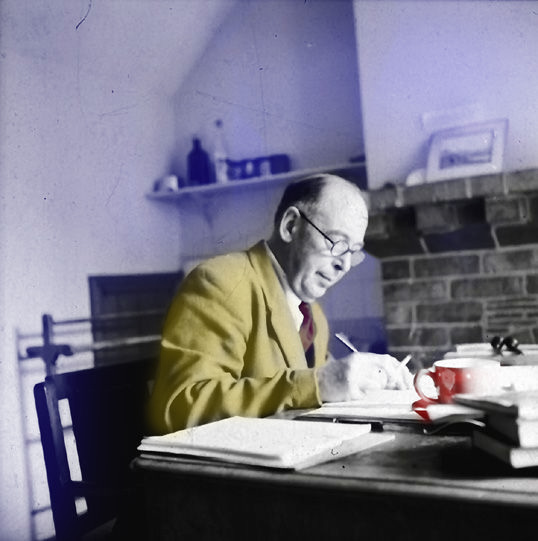
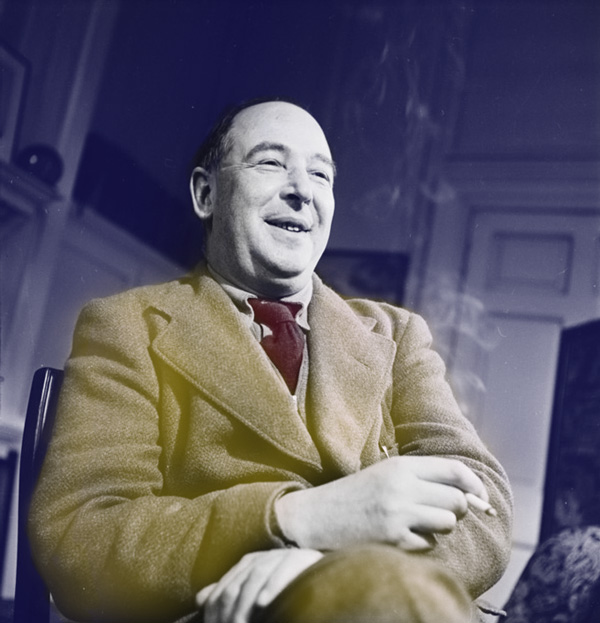
C.S. Lewis’s Ideal Daily Routine

http://www.brainpickings.org/index.php/2014/08/14/c-s-lewis-daily-routine/

by 
“It is essential of the happy life that a man would have almost no mail.”
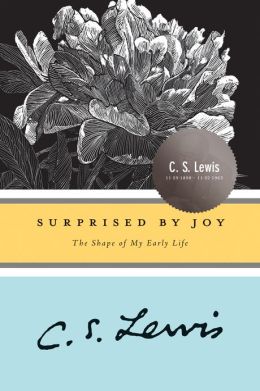
I’ve had a longtime fascination with the daily routines of notable writers and their creative rituals. One of the most lyrical, opinionated, and altogether wonderful comes from C.S. Lewis — a man of great wisdom on writing and extraordinary capacity for nuance in existential matters. In his 1955 spiritual memoir,Surprised by Joy: The Shape of My Early Life(public library), Lewis outlines his ideal daily routine, modeled after his time studying privately at Great Bookham with his father’s old tutor at the age of fifteen:
[I] settled into a routine which has ever since served in my mind as an archetype, so that what I still mean when I speak of a “normal” day (and lament that normal days are so rare) is a day of the Bookham pattern. For if I could please myself I would always live as I lived there. I would choose always to breakfast at exactly eight and to be at my desk by nine, there to read or write till one. If a cup of good tea or coffee could be brought me about eleven, so much the better. A step or so out of doors for a pint of beer would not do quite so well; for a man does not want to drink alone and if you meet a friend in the taproom the break is likely to be extended beyond its ten minutes. At one precisely lunch should be on the table…
Like artist Maira Kalman, who has long advocated for walking as a creative catalyst, Lewis was an avid walker — but with a key disclaimer:
By two at the latest I would be on the road. Not, except at rare intervals, with a friend. Walking and talking are two very great pleasures, but it is a mistake to combine them. Our own noise blots out the sounds and silences of the outdoor world; and talking leads almost inevitably to smoking, and then farewell to nature as far as one of our senses is concerned. The only friend to walk with is one … who so exactly shares your taste for each mood of the countryside that a glance, a halt, or at most a nudge, is enough to assure us that the pleasure is shared.
(Of course, walking with the right kind of companion can only amplify our capacity to pay attention, rather than diminishing it.)
Lewis holds equally strong opinions about his tea. One can almost picture him demanding a strict adherence to George Orwell’s eleven golden rules for the perfect cup of tea as he describes the afternoon ritual:
The return from the walk, and the arrival of tea, should be exactly coincident, and not later than a quarter past four. Tea should be taken in solitude…
He goes on to outline the qualitative norms for permissible multitasking during mealtime, with some humbling criteria for what he considers light — “gossipy, formless” — reading:
Eating and reading are two pleasures that combine admirably. Of course not all books are suitable for mealtime reading. It would be a kind of blasphemy to read poetry at table. What one wants is a gossipy, formless book which can be opened anywhere. The ones I learned so to use at Bookham were Boswell, and a translation of Herodotus, and Lang’s History of English LiteratureTristram ShandyElia and The Anatomy of Melancholy are all good for the same purpose.
And then, it’s back to work until bedtime, the latter being a matter of strict discipline — because, lest we forget, the correlation between sleep and literary productivity is not to be dismissed:
At five a man should be at work again, and at it till seven. Then, at the evening meal and after, comes the time for talk, or, failing that, for lighter reading; and unless you are making a night of it with your cronies (and at Bookham I had none) there is no reason why you should ever be in bed later than eleven.
But Lewis’s most prescient money-quote — the one likely to elicit a bitter cackle from today’s inbox-weary writer — comes at the very end:
But when is a man to write his letters? You forget that I am describing the happy life I led with Kirk or the ideal life I would live now if I could. And it is essential of the happy life that a man would have almost no mail and never dread the postman’s knock.

Thursday, September 11, 2014

Forbes's Top-Earning Authors: 'The Kids Are Coming'

Wednesday, September 10, 2014     Shelf Awareness


Veronica Roth
E.L. James's reign at the top of Forbes magazine's annual "World's Top-Earning Authors" list turned out to be brief, if lucrative. The Fifty Shadesauthor fell from the #1 spot in 2013 ($95 million) to a tie for 14th place this year ($10 million), as newcomers Veronica Roth ($17 million), 
Gillian Flynn ($9 million) and John Green ($9 million) hit the list for the first time, prompting Forbes to note: "Watch out Danielle Steel and Stephen King--the kids are coming."

To formulate its highest-earning authors list, Forbes "looks at print, e-book and audiobook sales from Nielsen BookScan figures, consider TV and movie earnings and talk to authors, agents, publishers and other experts." The top-earning authors, as ranked by earnings between June 2013 and June 2014, are:

  • James Patterson ($90 million)
  • Dan Brown ($28 million)
  • Nora Roberts ($23 million)
  • Danielle Steel ($22 million)
  • Janet Evanovich ($20 million)
  • Jeff Kinney ($17 million)
  • Veronica Roth ($17 million)
  • John Grisham ($17 million)
  • Stephen King ($17 million)
  • Suzanne Collins ($16 million)
  • J.K. Rowling ($14 million)
  • George R.R. Martin ($12 million)
  • David Baldacci ($11 million)
  • Rick Riordan ($10 million)
  • E.L. James ($10 million)
  • Gillian Flynn ($9 million)
  • John Green ($9 million)

Friday, July 11, 2014

Check out ABE's impressive archives of articles about books, authors, illustrators book collecting and ephemera

Love Reading about Books?
Visit our Archives

 
Visit our archives
 
You already know AbeBooks has millions of books offered for sale by thousands of booksellers in dozens of countries. Well, we also have hundreds of articles written by our staff about books, authors, illustrators, book collecting and ephemera. There are also dozens of book lists to help you find your next read.

Monday, June 23, 2014

Amazon Overlord


Reposted from: 
Thalia Press Authors Co-op Blog
By Gary Phillips
June 23rd, 2014


There’s an ongoing dust-up over the selling price of e-books between publishing giant Hachette and retail behemoth Amazon. While Hachette author Stephen Colbert can give Amazon the double finger on his show, the rest of us might not be so bold. Not for the first time in a fight with a member of the Big Five, Amazon has shown it is not to be effed with. It has taken away the pre-order buttons on upcoming Hachette books – includingSilkworm by bestseller J.K. Rowling, and current Hachette books are said to be not in stock or new copies are not for sale.
While it would seem that a big, to use the baller term, like Hachette wouldn’t blink and promote its titles on other sources like Barnes and Noble online, iTunes and such, it seems Amazon has it by the short and curlies when it comes to the ebook versions of their cataloge. For reasons that are painfully technical, I reference what sci-fi writer and social commentator Cory Doctrow wrote on this matter in the June 20 Guardian.com:
“Hachette, more than any other publisher in the industry, has had a single minded insistence on DRM [digital rights management] since the earliest days. It’s likely that every Hachette ebook ever sold has been locked with some company’s proprietary DRM, and therein lies the rub. Under US law only the company that put the D
smartphone-obey
RM on a copyrighted work can remove it. Although you can learn how to remove Amazon’s DRM with literally a single, three-word search, it is nevertheless illegal to do so, unless you’re Amazon…It is precisely because Hachette has been so successful in selling its ebooks through Amazon that it can’t afford to walk away from the retailer. By allowing Amazon to put a lock on its products whose key only Amazon possessed, Hachette has allowed Amazon to utterly usurp its relationship with its customers.”

There’s a well-done article by George Packer that ran in the February 27 issue of the New Yorkerabout the irresistible rise of Amazon. Entitled “Cheap Words,” the piece begins with this portentous statement, “In the era of the Kindle, a book costs the same price as a sandwich.” Packer goes on to further note that its founder Jeff Bezos intended for Amazon to sell books as a way of gathering data on affluent, educated shoppers. That books would be priced close to cost, in order to increase sales volume.
As an example of how Amazon utilizes its prized data, this past week they released the Fire smartphone. The phone comes with an app called Firefly – not to be confused with Joss Whedon’s cult TV sci-fi show of the same name — that can identify a song from a few lyrics or, I guess, if you point it at a particular crystal vase, hipping you want kind of bric-a-brac it is. Of course these items for just a few clicks away can be ordered, paid for by your credit card on file, and delivered (maybe same-day) to your home or office from Amazon. As a sales incentive, any picture you take with the Fire phone will for free be stored on one of the retailers’ mighty computers.
Hmm, I wonder if facial recognition software will ID a Hachette author you might snap a pic of and the phone sends you a note urging you to buy a book from a Holtzbrinck author?

Sunday, March 24, 2013

37 Percent of People Completely Lost


This excellent article was forwarded to me by my sweet mother, a veteran news hound, and is a superb read. I am lifting it in its entirety from Common Dreams. -Sky

Six percent of Americans believe in unicorns. Thirty-six percent believe in UFOs. A whopping 24 percent believe dinosaurs and man hung out together. Eighteen percent still believe the sun revolves around the Earth. Nearly 30 percent believe cloud computing involves… actual clouds. A shockingly sad 18 percent, to this very day, believe the president is a Muslim. Aren’t they cute? And Floridian?


Do you believe in angels? Forty-five percent of Americans do. In fact, roughly 48 percent – Republicans and Democrats alike – believe in some form of creationism. A hilariously large percent of terrified right-wingers are convinced Obama is soon going to take away all their guns, so when the Newtown shooting happened and 20 young children were massacred due to America’s fetish for, obsession with and addiction to firearms, violence and fear, they bought more bullets. Because obviously.
In sum and all averaged out, it’s safe to say about 37 percent of Americans are just are not very bright. Or rather, quite shockingly dumb. Perhaps beyond reach. Perhaps beyond hope or redemption. Perhaps beyond caring about anything they have to say in the public sphere ever again. Sorry, Kansas.
Did you frown at that last paragraph? Was it a terribly elitist and unkind thing to say? Sort of. Probably. But I’m not sure it matters, because none of those people are reading this column right now, or any column for that matter, because reading anything even remotely complex or analytical is something only 42 percent of the population enjoy doing on a regular basis, which is why most TV shows, all reality shows, many major media blogs and all of Fox News is scripted for a 5th-grade education/attention span. OMG LOL kittens! 19 babies having a worse day than you. WTF is up with Justin Timberlake’s hair?!?
It is this bizarre, circular, catch-22 kind of question, asked almost exclusively by intellectual liberals because intellectual conservatives don’t actually exist, given how higher education leads to more developed critical thinking (you already know the vast majority of university professors and scientists identify as Democrat/progressive, right?) which leads straight to a more nimble, open-minded perspective. In short: The smarter you are, the less rigid/more liberal you become.
Until you get old. Or rich. And scared. And you forget. And you clamp down, seize up, fossilize. And the GOP grabs you like a mold.
Oh right! The question: How to reach the not-very-bright hordes, when they simply refuse to be reached by logic, fact, or modern mode? How to communicate obvious and vital truths (conservation, global warming, public health, sexuality, basic nutrition, religion as parable/myth, the general awfulness of Mumford & Sons) the lack of understanding of which keep the country straggling and embarrassing, the laughingstock of the civilized world?
And who are these people, exactly? And are they all really in Kentucky and Florida and Mississippi? Are they all in the Tea Party? Is failing education to blame? A dumbed-down media? Reality TV? In the wealthiest and most egomaniacal superpower in the world, why is the chasm so wide?
There is no easy answer, but there is a great deal of irony. It is a wicked conundrum that you and I can debate the definition of elitism, whether or not it’s fair to criticize those who believe that, say, gay marriage means kids will be indoctrinated into homosexuality, or that evolution is still a theory, or that Jesus literally flew up out of a cave and into the sky, when the discussion itself is, by nature, elitist, exclusionary, requiring fluid, abstract thinking the very people we’re discussing simply do not possess, and therefore cannot participate in.
Discussion of elitism is elitist. Intelligence can talk itself blue about what to do about all the dumb; the dumb will never hear it.
It’s a fact even recognized by Louisiana’s own Gov. Bobby Jindal, who had the nerve to defy his own state’s (and his own party’s) famously low IQ by saying, after the last election, “The GOP must stop being the stupid party. It’s time for a new Republican Party that talks like adults.”
Of course he’s right. But where would that leave their base? And who will tell the megachurches? And does Jindal not know Louisiana is where they teach that the existence of the Loch Ness monster is evidence that evolution is a lie?
Brings to mind a stunning study about facts and truths. Have you ever heard it? It goes something like: Here is hard evidence, scientific evidence, irrefutable proof that something is or is not true. Here is dinosaur bone, for example, which we know beyond a doubt is between 60 and 70 million years old. Amazing! Obviously!
But then comes the impossible snag: If you are hard-coded to believe otherwise, if your TV network or your ideology, your pastor or your lack of education tell you differently, you will still not believe it. No matter what. No matter how many facts, figures, common senses slap you upside the obvious. You will think there is conspiracy, collusion, trickery afoot. The Bible says that bone is only eight thousand years old. Science is elitist. Liberals hate God. The end.
It is not enough to say people believe what they want to believe. They will also believe it in the face of irrefutable counter-evidence and millennia of fundamental proof.
This! This is what stuns and stupefies liberals and progressives of every intellectual stripe. We cannot understand. We cannot compute. We think, “Well, if more people just had the facts, just heard a reasonable and cogent argument or read up on the real science, surely they would change their minds? Surely they would see the error in their thinking?”
Oh, liberals. All those smarts, and still so naïve.
Here is the body of Jesus! We found it! In a cave in a hole deep in an iron-gated alcove beneath the Vatican! Turns out he is not the Messiah after all! Turns out – look at those tribal tattoos! Those mala beads! That blond hair! – he’s a wild non-dualist guru from parts unknown. Christianity is a total fabrication! Always has been, always will be.
Here is hard evidence coupled with an ocean of common sense that more guns equal only more violence and death! Stat after stat, mass shooting after mass shooting proving we have it all wrong about protection and fear. Also! At least 2,605 people have died by gun violence in America since the Newtown shooting. Can we ban them now? No?
Here is overwhelming evidence that global warming is ravaging us like a furious god, and not only are we complicit, not only have we blindly raced forth into the abyss, we are, if all goes according to current trends and speeds and attitudes, totally f–king doomed.
Ah, unicorns. You look better every day.

Sunday, December 9, 2012

Mother Nature Belongs at the Bargaining Table

Original Link at Other Worlds: http://www.otherwords.org/articles/mother_nature_belongs_at_the_bargaining_table


December 5, 2012Op-Ed, 657 words

Tuesday, September 18, 2012

BookFinder.com Out-of-Print & In Demand Report 2012

Original Article


The books we see for sale at a local chain bookstore or purchase new online are a small fraction of the entirety of human print culture.  In fact, 98 to 99% of all books ever published are now out of print. These are the books featured in the BookFinder.com Report.
The BookFinder.com Report is issued every fall, and the 2012 edition marks the 10th anniversary of our tracking the most sought after out-of-print books in America.
Topping our anniversary list are the "big three" of out-of-print books which perennially find their way onto the BookFinder.com Report: Sex by Madonna, Rage by Richard Bachman (aka Stephen King), and Promise Me Tomorrow by Nora Roberts.  This year's list also marks the graduation of Marilyn by Norman Mailer, which after appearing in four straight Reports was finallyreprinted by Taschen last December.
Some of the out-of-print titles new to the BookFinder.com Report include:
Pure, White and Deadly ; the Problem of Sugar by John Yudkin
First published in 1972, Professor Yudkin’s book outlines his research showing that sugar and refined sweeteners are closely associated with heart disease and type 2 diabetes. The book has shot back into demand after being highly praised in Robert Lustig’s lecture “Sugar: The Bitter Truth” which enjoyed YouTube viral success.  Yudkin’s book was reprinted in the UK in 2012 but remains out-of-print in the U.S.
Phoebe and the Hot Water Bottles by Linda Dawson
This juvenile fiction work has been out-of-print in America since 1979. It features a young girl who has millions of hot-water bottles and uses them to douse a blaze when her house catches fire. She receives a puppy for her efforts.
Big League Sales Closing Techniques by Les Dane
Les Dane has published several guides to sales techniques,  including this now out-of-print 1971 title. The guide reviews common scenarios found in sales, teaching would-be salesmen fundamental techniques for closing a deal.
Country Landscapes in Watercolor by John Blockley
Blockley demonstrates techniques of landscape and watercolor in this book which has been out-of-print since 1982.

Top 100 most sought after out-of-print books in 2012

1MadonnaSex
2Stephen King (as Richard Bachman)Rage
3Nora RobertsPromise me Tomorrow
4Stephen KingMy Pretty Pony
5John YudkinPure, White and Deadly; the Problem of Sugar
6Kyle OnstottMandingo
7Johnny CashMan in Black
8Luigi SerafiniCodex Seraphinianus
9Nan Gilbert365 Bedtime Stories
10Alice StarmoreTudor Roses
11Cameron CroweFast Times at Ridgemont High
12Mary and Vincent PriceA Treasury of Great Recipes
13Ray BradburyDark Carnival
14Salvador Dali, illustratorThe Jerusalem Bible
15Lynne CheneySisters 
16H.Henry ThomasArithmetic Progress Papers
17Janet WoodsBeyond the Plough
18A.C.H. SmithLabyrinth: A Novel
19Ray GartonIn a Dark Place: The Story of a True Haunting
20Walt Kelly I Go Pogo
21Linda Dawson & Terry FurchgottPhoebe and the Hot Water Bottles
22Allen DruryAdvise and Consent
23Jean LarteguyThe Centurions
24J.R. HartleyFly Fishing: Memories of Angling Days
25Anna Elizabeth BennettLittle Witch
26W. ClawsonCollector's Guide to Colt .45 Service Pistols: models of 1911 and 1911a1 from 1911 to the end of production in 1945 complete military identification, including all contractors
27JaÅ› ElsnerReflections of Nero : culture, history & representation
28C.S. LewisThe Allegory of Love: A Study in Medieval Tradition
29Robert NathanThe Bishop's Wife
30Madeleine L'EngleIlsa
31Sarah BradfordReluctant King: The Life and Reign of George VI, 1895-1952
32Carl SaganMurmurs of Earth
33Ricky JayCards As Weapons
34Alan Raven and John RobertsBritish Battleships of World War Two: The Development and Technical History of the Royal Navy's Battleships and Battlecruisers from 1911 to 1946
35Clancy HollingBook of Indians
36Curtis RichardsHalloween
37Jay CronleyGood Vibes
38Charles FlatoThe Golden Book of the Civil War
39Dennis PotterTicket to Ride
40Elmer KeithHell, I Was There
41Ernest ColeHouse of Bondage
42Anne AlexanderThe Pink Dress
43Donald HamiltonThe Big Country
44R.P. HunnicuttStuart: A History of the American Light Tank
45Les DaneBig League Sales Closing Techniques
46David WhitfordA Payroll to Meet: A Story of Greed, Corruption, and Football at SMU
47Kate HolmesToo Good to be Threw
48Thomas CravenA Treasury of American Prints - A Selection of One Hundred Etchings and Lithogrphas by the Foremost Living American Artists
49Paul HoffmanTo Drop a Dime
50John BlockleyCountry Landscapes in Watercolor
51Mary KoniorCrochet lace : an illustrated guide to making crochet lace fabrics
52Cecil BeatonThe Glass of Fashion
53Arthur KoestlerThe Act of Creation
54 Ronald WelchBowman of Crecy
55Laura LondonThe Windflower
56Robert NathanThe Bishop's Wife
57Tom LeaThe King Ranch
58Milt TenopirThe assembly line
59Edward MatunasPractical Gunsmithing
60W Somerset MaughamTellers of Tales: 100 short stories from the United States, England, France, Russia and Germany
61Allan D RichterEve of the end
62Joseph ZbukvicMastering Atmosphere and Mood in Watercolor: the critical ingredients that turn paintings into art
63Ben BovaThe Star Conquerors
64David WilliamsSecond Sight
65John HarrisCovenant with death
66Nicholas GuildThe Blood Star
67Truda Williams McCoy; Leonard RobertsMcCoys: their story as told to the author by eye witnesses and descendants
68John BlaineThe Magic Talisman
69Barbara Newhall FollettThe House Without Windows
70David WilkersonThe Vision and Beyond, prophecies fulfilled and still to come
71Marie SimmonsPancakes A to Z
72Glen CookShe Is The Darkness
73Martin CaidinCyborg
74Harry Twyford PetersCurrier & Ives: Printmakers to the American People
75Laura BannonThe Wonderful Fashion Doll
76Paul GallicoJennie (or The Abandoned)
77Watt PiperThe Bumper Book; a Harvest of Stories and Verses
78James Virgil HoweThe Modern Gunsmith : a guide for the amateur and professional gunsmith in the design and construction of firearms, with practical suggestions for all who like guns
79Kyle OnstottDRUM
80John D. GreenBirds of Britain
81Polan BanksCarriage Entrance
82Charles ThomsonThe Septuagint Bible
83Don GrafBasic Building Data: 10,000 Timeless Construction Facts 
84John CageNotations
85Ruth OrbachApple Pigs
86Alexei GutnovThe Ideal Communist City
87J. Jason GrantCoal
88Henry W. SimonA Treasury of Grand Opera
89Jack S. LevyWar in the Modern Great Power System, 1495-1975
90Doyle C. BarnesOur Journey in the Life
91Peter NewmarkApproaches to translation
92Kyle Onstott & Lance HomerThe Black Sun
93Jan WolkersTurkish Delight
94Maisie MoscoAlmonds and Raisins
95John Thomas EdsonAlvin Fog, Texas ranger
96Hugh WoosleyBasic medical laboratory subjects
97Hansjurgen FettigHand and rod puppets : a handbook of technique
98Craig Shaw GardnerThe Lost Boys
99Norman Rockwell102 favorite paintings
100William Stuart LongThe Imperialists