Showing posts with label Sustainability. Show all posts
Showing posts with label Sustainability. Show all posts
Wednesday, October 19, 2011
Come Visit Our Book Dome at the Okanogan/Tonasket Barter Faire
We'll be on the North end of one of the aisles, as usual. Look for the Pirate Flag!


Friday, August 5, 2011
$30M expansion for Walla Walla prison
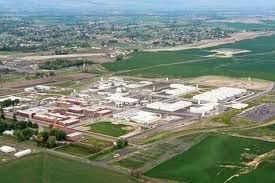
Wish I had more for ya... but this is it so far... except for a few old plans from 2008...
By JOURNAL STAFFAugust 2, 2011
TUMWATER — The state Department of Corrections later this month will open bids for a $28 million to $30 million expansion at the Washington State Penitentiary in Walla Walla.
Work will involve construction of two nearly identical housing units, each about 45,000 square feet with 256 beds. They will house medium-security inmates.
Sunday, May 23, 2010
Hold BP Accountable for Environmental Degradation!

We have to do something to hold BP accountable for what's turning into the worst oil spill of all time! This is just a first step--and it's not like there's a good oil company--but I just signed a pledge to boycott BP for three months. You can join the boycott at www.BeyondBP.org and make at least a dent in the profits of at least one negligent corporation.
Sunday, October 25, 2009
THE JOY OF LESS By Wendy Steiner
This article is amazing, just read it in the new Adbusters and had to share it:
“Waste not, want not.” Chipper, smug, old, this green adage has all the appeal of a thrice-used teabag. More-over, hidden behind its virtue is the dirty truth about sustainability: If we don’t waste, it’s probably because we don’t really “want.” Desire, pleasure, what we want, is a function of freedom, not prudence and constraint. We who want revel in waste.
Listen to one such reveler, Jack Gladney, hero of Don DeLillo’s novel White Noise (1985), as he shops with his family in the mall:
When I could not decide between two shirts, they encouraged me to buy both. When I said I was hungry, they fed me pretzels, beer, souvlaki…. They were my guides to endless well-being…. I shopped with reckless abandon. I shopped for immediate needs and distant contingencies. I shopped for its own sake…. I began to grow in value and self-regard. […] Brightness settled around me…. I traded money for goods. The more money I spent, the less important it seemed. I was bigger than these sums…. These sums in fact came back to me in the form of existential credit.1
What hope is there for sustainability when conspicuous consumption holds all the cards for pleasure: self-realization, aesthetic transport, spiritual transcendence?
Parodic as this waste artist might appear, Jack Gladney demonstrates the philosophical entanglement of pleasure in the idea of limitless freedom. The consti-tutional rights to “life, liberty, and the pursuit of happi-ness” are in fact one single right, its elements inextricably inter-implicated. The aesthetic equivalent is the “dis-interested interest” of Kantian beauty, a taste of virtual possibility without the limiting condition of actual consequences. “Negative capability,” the gift of the Keatsian poet, is the imaginative flexibility to entertain uncertainty, to be “open-minded” rather than confined to the sharp contours of determinate identity. No gesture so blatantly asserts this freedom as imprudent, heedless waste. Runa Islam’s 2004 film Be The First To See What You See as You See It presents a woman ever so slowly pushing china cups and teapots off their pedestals.
We watch them shattering into starburst shards in a strange state of fascination, joy, release that approaches the sublime.2 Pipilotti Rist evokes a similar euphoria in her video installation Ever Is Over All (1997), as a woman ecstatically walks down a street while smashing car windows with an exotic flower stock in full view of a smiling police officer. Perhaps the ultimate expression of the pleasure-waste relation is Vladimir Nabokov’s Lolita (1955), which junks nothing less than Western morality in the name of sheer “aesthetic bliss.”3
For Nabokov, of course, this ultimate pleasure is precisely the opposite of the prepackaged gratifications arising from mass consumerism, and herein lies the comedy of DeLillo’s shopper-aesthete. But the line between Jack Gladney and Humbert Humbert is paper-thin. They are both sensualists, sensationalists, participants in the “pleasure economy” of an “age of surplus.” Nancy Bentley has traced this consumerist aesthetics to the pragmatist philosopher William James, who was much influenced in turn by the theories of Penn economist Simon Patten’s 1907 book The New Basis of Civilization. According to Bentley, “pleasure” for James and Patten is shorthand for “the new range of experiences … that multiply under the aegis of a consumer-driven economy…. What if we were to recognize value, James asks, in terms of enjoyment rather than productive work? What if doing and thinking were both different extensions of the same motive force of eagerness? If meaning were redefined by ‘feelings of excited significance’ … [and] sensory experience and pleasure [were] an index of pragmatic truth?”4
The prophet of this “value as pleasure,” in James’s eyes, was Walt Whitman. Significantly for our purposes, Whitman’s aesthetics turned on the experience of excess. His poetic lines run on and on, defying meter and measure to accommodate immoderate lists of phenomena and hosannas to the inexhaustible possibility he identified as “America.” It was from city life, Bentley claims, that he took his inspiration: “Whitman looks to the phenomeno-logical topography of a pleasure economy in which urban crowds, transport systems like ferryboats and omni-buses, strolling laborers, women’s and men’s fashions, shops with ‘great windows’—in short, any and all sites that afford ‘gayety and motion on every side’—are sources of the pragmatic truths of ‘excitement’ and thus carry a potential for public significance. For James, Whitman is carrying out the new pleasure economy work, an ‘occup-ation’ in which seeking corporeal feeling and immersion in human crowds count as ‘business sufficient and worthy to fill the days of a serious man.’”5
This equation of pleasure with the endless variety of city life is also central to the sensibility of European modernists, as we see in Charles Baudelaire’s flâneur, Gertrude Stein’s Parisian window shopper, André Breton’s surrealist vagrant, and André Gide’s “disponible” immoralist, all glutting themselves on the heterogeneity and intensity of urban sensation. A century of techno-logical advances has only increased the scope for open-ness and excess, until today we may experience a “global sublime,” a delirious expansion of self into Internet infinity. The 21st-century pleasure economy permits us to exceed ourselves—ecstatically, extravagantly, waste-fully—until, like Whitman, we are “multitudes.”
Read More...
“Waste not, want not.” Chipper, smug, old, this green adage has all the appeal of a thrice-used teabag. More-over, hidden behind its virtue is the dirty truth about sustainability: If we don’t waste, it’s probably because we don’t really “want.” Desire, pleasure, what we want, is a function of freedom, not prudence and constraint. We who want revel in waste.
Listen to one such reveler, Jack Gladney, hero of Don DeLillo’s novel White Noise (1985), as he shops with his family in the mall:
When I could not decide between two shirts, they encouraged me to buy both. When I said I was hungry, they fed me pretzels, beer, souvlaki…. They were my guides to endless well-being…. I shopped with reckless abandon. I shopped for immediate needs and distant contingencies. I shopped for its own sake…. I began to grow in value and self-regard. […] Brightness settled around me…. I traded money for goods. The more money I spent, the less important it seemed. I was bigger than these sums…. These sums in fact came back to me in the form of existential credit.1
What hope is there for sustainability when conspicuous consumption holds all the cards for pleasure: self-realization, aesthetic transport, spiritual transcendence?
Parodic as this waste artist might appear, Jack Gladney demonstrates the philosophical entanglement of pleasure in the idea of limitless freedom. The consti-tutional rights to “life, liberty, and the pursuit of happi-ness” are in fact one single right, its elements inextricably inter-implicated. The aesthetic equivalent is the “dis-interested interest” of Kantian beauty, a taste of virtual possibility without the limiting condition of actual consequences. “Negative capability,” the gift of the Keatsian poet, is the imaginative flexibility to entertain uncertainty, to be “open-minded” rather than confined to the sharp contours of determinate identity. No gesture so blatantly asserts this freedom as imprudent, heedless waste. Runa Islam’s 2004 film Be The First To See What You See as You See It presents a woman ever so slowly pushing china cups and teapots off their pedestals.
We watch them shattering into starburst shards in a strange state of fascination, joy, release that approaches the sublime.2 Pipilotti Rist evokes a similar euphoria in her video installation Ever Is Over All (1997), as a woman ecstatically walks down a street while smashing car windows with an exotic flower stock in full view of a smiling police officer. Perhaps the ultimate expression of the pleasure-waste relation is Vladimir Nabokov’s Lolita (1955), which junks nothing less than Western morality in the name of sheer “aesthetic bliss.”3
For Nabokov, of course, this ultimate pleasure is precisely the opposite of the prepackaged gratifications arising from mass consumerism, and herein lies the comedy of DeLillo’s shopper-aesthete. But the line between Jack Gladney and Humbert Humbert is paper-thin. They are both sensualists, sensationalists, participants in the “pleasure economy” of an “age of surplus.” Nancy Bentley has traced this consumerist aesthetics to the pragmatist philosopher William James, who was much influenced in turn by the theories of Penn economist Simon Patten’s 1907 book The New Basis of Civilization. According to Bentley, “pleasure” for James and Patten is shorthand for “the new range of experiences … that multiply under the aegis of a consumer-driven economy…. What if we were to recognize value, James asks, in terms of enjoyment rather than productive work? What if doing and thinking were both different extensions of the same motive force of eagerness? If meaning were redefined by ‘feelings of excited significance’ … [and] sensory experience and pleasure [were] an index of pragmatic truth?”4
The prophet of this “value as pleasure,” in James’s eyes, was Walt Whitman. Significantly for our purposes, Whitman’s aesthetics turned on the experience of excess. His poetic lines run on and on, defying meter and measure to accommodate immoderate lists of phenomena and hosannas to the inexhaustible possibility he identified as “America.” It was from city life, Bentley claims, that he took his inspiration: “Whitman looks to the phenomeno-logical topography of a pleasure economy in which urban crowds, transport systems like ferryboats and omni-buses, strolling laborers, women’s and men’s fashions, shops with ‘great windows’—in short, any and all sites that afford ‘gayety and motion on every side’—are sources of the pragmatic truths of ‘excitement’ and thus carry a potential for public significance. For James, Whitman is carrying out the new pleasure economy work, an ‘occup-ation’ in which seeking corporeal feeling and immersion in human crowds count as ‘business sufficient and worthy to fill the days of a serious man.’”5
This equation of pleasure with the endless variety of city life is also central to the sensibility of European modernists, as we see in Charles Baudelaire’s flâneur, Gertrude Stein’s Parisian window shopper, André Breton’s surrealist vagrant, and André Gide’s “disponible” immoralist, all glutting themselves on the heterogeneity and intensity of urban sensation. A century of techno-logical advances has only increased the scope for open-ness and excess, until today we may experience a “global sublime,” a delirious expansion of self into Internet infinity. The 21st-century pleasure economy permits us to exceed ourselves—ecstatically, extravagantly, waste-fully—until, like Whitman, we are “multitudes.”
Read More...
Sunday, August 12, 2007
Illahee Resort Bad Business For Walla Walla
Okay, so most of this is my own opinion I suppose, except for the links that is, but this just rings all wrong to me, as an intelligent human being who loves and supports local community and local economy. I mean come on, an out-of-town development corporation comes in, low-bids a chunk of land right next to our water supply, gets a cheaper price than any local residents, sells the first home to the Port Commissioner and wants to start some bourgeois
golf course for out-of-town wine snobs?
There's gotta be a better way to take their money and keep it in our town. Don't they read anything other than books on wine or art? Don't they shop at Earthlight? Don't they realize how cool we are already, without them? Granted, those books do cost a fair deal of money and we do like their money, but why sell out our land and water to another company from another state when we could capitalize on the scenario sustainably and locally and reap a higher percentage of the profits while we personally improve our own amazing town? We have so much history, why spend our heritage in some other store when we have our own silos to fill and share with our neighbors. And ya know what? I just don't wanna look at it every time I drive to my family's cabin that was built in 1919. Plain and simple. Just the way we like it?
Here's some old articles I found, plus one new one. Sorry if any of the info is wrong now, I've just been pissed for awhile and stockpiling ammo. Sometimes, if the revolution takes a spell or two, the ammo gets rusty, or the spell fails to be cast.
Walla Walla 2020's website
Walla Walla 2020 keeps eye on area - this one's actually good news, I guess, especially since the UB printed it!
New Golf Project Slated For Walla Walla
Jacobsen Hardy to Commence Work on Walla Walla Course
‘Don’t Bend Walla Walla,’ locals argue
Walla Walla doesn't want to be like Bend
The Town That Doesn't Want to Bend: Walla Walla citizens see Bend as a model of how not to grow
Here's Abito's Website
more to follow, thanks for staying tuned over the tedious months
golf course for out-of-town wine snobs?
There's gotta be a better way to take their money and keep it in our town. Don't they read anything other than books on wine or art? Don't they shop at Earthlight? Don't they realize how cool we are already, without them? Granted, those books do cost a fair deal of money and we do like their money, but why sell out our land and water to another company from another state when we could capitalize on the scenario sustainably and locally and reap a higher percentage of the profits while we personally improve our own amazing town? We have so much history, why spend our heritage in some other store when we have our own silos to fill and share with our neighbors. And ya know what? I just don't wanna look at it every time I drive to my family's cabin that was built in 1919. Plain and simple. Just the way we like it?
Here's some old articles I found, plus one new one. Sorry if any of the info is wrong now, I've just been pissed for awhile and stockpiling ammo. Sometimes, if the revolution takes a spell or two, the ammo gets rusty, or the spell fails to be cast.
Walla Walla 2020's website
Walla Walla 2020 keeps eye on area - this one's actually good news, I guess, especially since the UB printed it!
New Golf Project Slated For Walla Walla
Jacobsen Hardy to Commence Work on Walla Walla Course
‘Don’t Bend Walla Walla,’ locals argue
Walla Walla doesn't want to be like Bend
The Town That Doesn't Want to Bend: Walla Walla citizens see Bend as a model of how not to grow
Here's Abito's Website
more to follow, thanks for staying tuned over the tedious months
Thursday, March 8, 2007
An Organic Recipe for Development
Published on Monday, December 18, 2006 by the Inter Press Service
An Organic Recipe for Development
by Stephen Leahy
Organic agriculture is a potent tool to reduce emissions of greenhouse gases, but also to alleviate poverty and improve food security in developing countries, many experts now believe.
Organic agriculture's use of compost and crop diversity means it will also be able to better withstand the higher temperatures and more variable rainfall expected with global warming.
0
The University of New England (Australia) is offering a new unit of study that will prepare people in rural industries for one of the most important developments of twenty-first-century farming: organic agriculture.
"Organic agriculture is about optimising yields under all conditions," says Louise Luttikholt, strategic relations manager at the International Federation of Organic Agriculture (IFOAM) in Bonn, Germany. IFOAM is the international umbrella organisation of organic agriculture movements around the world.
For example, a village in the Tigray region of northern Ethiopia that had converted to organic agriculture continued to harvest crops even during a severe drought, while neighbouring villages using conventional chemical fertilisers had nothing, Luttikholt told IPS.
Because compost is used rather than chemical fertilisers, organic soils contain much more humus and organic carbon -- which in turn retains much more water.
"They can also absorb more water faster which means they are less likely to flood," she said.
It took more work to make the conversion to organic but it paid off when the drought stuck in the third year, according to Tewolde Berhan Gebre Egziabher, director general of the Environmental Protection Authority of Ethiopia.
Tewolde, who pioneered the organic revolution in a number of communities in northern Ethiopia as a way of ensuring food security, reported that the early success has prompted government agricultural departments to adopt organic techniques.
Organic and other forms of sustainable agro-ecology do not depend on chemical fertilisers, so they must find other ways to enrich soil and keep it that way. That also means there are more minerals and other nutrients in the soil so yields are generally good and food quality high.
And the added benefit is that organic soils hold much more carbon than soils farmed with conventional methods.
Rising levels of carbon dioxide in the atmosphere from the burning of fossil fuels is the principal cause of global warming. Plants absorb carbon dioxide from the air and can put it more or less permanently into the soil under the right conditions.
In a 23-year side-by-side comparison, the carbon levels of organic soils increased 15 to 28 percent while there was little change in the non-organic systems, according to the Rodale Institute Farming Systems Trials conducted in the U.S. state of Pennsylvania.
If just 10,000 medium-sized farms in the U.S. converted to organic production, they would store so much carbon in the soil that it would be equivalent to taking 1,174,400 cars off the road, Rodale reported in 2003.
And there's more.
Making chemical fertilisers like nitrogen requires huge amounts of energy, and tractors also consume large amounts of fossil fuel. In the United States, organic farming systems use just 63 percent of the energy required by conventional farming systems, David Pimentel of Cornell University in New York State found.
Going organic also offers a number of other environmental benefits, including waterways free of chemical pollution and improved biodiversity. In North America and European farming regions, expensive systems must be used to remove agricultural chemicals from drinking water.
"Those external costs of conventional agriculture have to be paid by someone," said Volkert Engelsman, the CEO of Eosta BV, a European distributor of organic fruits and vegetables.
"Organic brings a wide range of social and economic benefits, making it a much better and more efficient way of farming," Engelsman said in an interview from Eosta's head office in Waddinxveen, Holland.
For low-income countries, that means more jobs because organic farming is labour-intensive. It also values local expertise and traditional knowledge. That makes more economic sense than being dependent on the technical expertise of Western corporations, he said.
Engelsman has just returned from India where organic farming is undergoing "explosive growth".
Faced with rapidly depleting soils, the Indian government is now supporting organic techniques because no amount of chemical fertiliser can improve the soil. In addition, water shortages, increased disease problems and higher costs of chemicals and hybrid seeds have forced India to rethink its agricultural strategy, he said.
"It is more economically sustainable to invest in the soils of your land than to make the chemical companies richer," Engelsman told IPS.
The problem of global hunger is not about food production -- it is about poverty and food distribution, since the world already produces enough food, he said.
Engelsman agrees with the noted Indian scientist and environmentalist Vandana Shiva that research into ecologically-friendly agriculture has proved that it is highly productive and is the only solution to hunger and poverty.
That view, once considered radical, is beginning to gain wider acceptance as hunger has increased under the globalised food production system.
Ten years after the 1996 World Food Summit in Rome, where countries pledged to halve the number of hungry in the world by 2015, there were more hungry people in the developing countries today, said the head of the U.N. Food and Agriculture Organisation (FA , Jacques Diouf, in a statement.
"Far from decreasing, the number of hungry people in the world is currently increasing -- at the rate of four million a year," Diouf said from Rome.
And finally the FAO is looking to organic to play a role in reducing hunger and alleviating poverty and will host a major conference in May 2007 in Rome. Many countries request FAO's assistance to develop organic agriculture, said Alexander Müller, assistant director-general of FAO, in a statement.
"There is a need to shed light on the contribution of organic agriculture to food security," Müller said.
Many countries are already moving in that direction.
Brazil's Minister of Agriculture Roberto Rodrigues has said he wants organic farming to grow from three percent of the country's agricultural output to 20 percent in the next five to six years.
Last month, 308 delegates from the Philippines' farming sector agreed to shift to organic production, in part because it can help poverty alleviation in rural communities.
Studies done by International Fund for Agricultural Development (IFAD), a U.N. agency set up to assist the rural poor to overcome poverty, have shown that organic agriculture reduced poverty. In almost all of the countries where the IFAD evaluations were carried out, small farmers needed only marginal improvements to their technologies to make the shift to organic production.
"Everyone is embracing organic agriculture now. And climate change will only boost that interest," Engelsman said.
(*This story is part of a series of features on sustainable development by IPS and IFEJ - International Federation of Environmental Journalists.)
An Organic Recipe for Development
by Stephen Leahy
Organic agriculture is a potent tool to reduce emissions of greenhouse gases, but also to alleviate poverty and improve food security in developing countries, many experts now believe.
Organic agriculture's use of compost and crop diversity means it will also be able to better withstand the higher temperatures and more variable rainfall expected with global warming.
0
The University of New England (Australia) is offering a new unit of study that will prepare people in rural industries for one of the most important developments of twenty-first-century farming: organic agriculture.
"Organic agriculture is about optimising yields under all conditions," says Louise Luttikholt, strategic relations manager at the International Federation of Organic Agriculture (IFOAM) in Bonn, Germany. IFOAM is the international umbrella organisation of organic agriculture movements around the world.
For example, a village in the Tigray region of northern Ethiopia that had converted to organic agriculture continued to harvest crops even during a severe drought, while neighbouring villages using conventional chemical fertilisers had nothing, Luttikholt told IPS.
Because compost is used rather than chemical fertilisers, organic soils contain much more humus and organic carbon -- which in turn retains much more water.
"They can also absorb more water faster which means they are less likely to flood," she said.
It took more work to make the conversion to organic but it paid off when the drought stuck in the third year, according to Tewolde Berhan Gebre Egziabher, director general of the Environmental Protection Authority of Ethiopia.
Tewolde, who pioneered the organic revolution in a number of communities in northern Ethiopia as a way of ensuring food security, reported that the early success has prompted government agricultural departments to adopt organic techniques.
Organic and other forms of sustainable agro-ecology do not depend on chemical fertilisers, so they must find other ways to enrich soil and keep it that way. That also means there are more minerals and other nutrients in the soil so yields are generally good and food quality high.
And the added benefit is that organic soils hold much more carbon than soils farmed with conventional methods.
Rising levels of carbon dioxide in the atmosphere from the burning of fossil fuels is the principal cause of global warming. Plants absorb carbon dioxide from the air and can put it more or less permanently into the soil under the right conditions.
In a 23-year side-by-side comparison, the carbon levels of organic soils increased 15 to 28 percent while there was little change in the non-organic systems, according to the Rodale Institute Farming Systems Trials conducted in the U.S. state of Pennsylvania.
If just 10,000 medium-sized farms in the U.S. converted to organic production, they would store so much carbon in the soil that it would be equivalent to taking 1,174,400 cars off the road, Rodale reported in 2003.
And there's more.
Making chemical fertilisers like nitrogen requires huge amounts of energy, and tractors also consume large amounts of fossil fuel. In the United States, organic farming systems use just 63 percent of the energy required by conventional farming systems, David Pimentel of Cornell University in New York State found.
Going organic also offers a number of other environmental benefits, including waterways free of chemical pollution and improved biodiversity. In North America and European farming regions, expensive systems must be used to remove agricultural chemicals from drinking water.
"Those external costs of conventional agriculture have to be paid by someone," said Volkert Engelsman, the CEO of Eosta BV, a European distributor of organic fruits and vegetables.
"Organic brings a wide range of social and economic benefits, making it a much better and more efficient way of farming," Engelsman said in an interview from Eosta's head office in Waddinxveen, Holland.
For low-income countries, that means more jobs because organic farming is labour-intensive. It also values local expertise and traditional knowledge. That makes more economic sense than being dependent on the technical expertise of Western corporations, he said.
Engelsman has just returned from India where organic farming is undergoing "explosive growth".
Faced with rapidly depleting soils, the Indian government is now supporting organic techniques because no amount of chemical fertiliser can improve the soil. In addition, water shortages, increased disease problems and higher costs of chemicals and hybrid seeds have forced India to rethink its agricultural strategy, he said.
"It is more economically sustainable to invest in the soils of your land than to make the chemical companies richer," Engelsman told IPS.
The problem of global hunger is not about food production -- it is about poverty and food distribution, since the world already produces enough food, he said.
Engelsman agrees with the noted Indian scientist and environmentalist Vandana Shiva that research into ecologically-friendly agriculture has proved that it is highly productive and is the only solution to hunger and poverty.
That view, once considered radical, is beginning to gain wider acceptance as hunger has increased under the globalised food production system.
Ten years after the 1996 World Food Summit in Rome, where countries pledged to halve the number of hungry in the world by 2015, there were more hungry people in the developing countries today, said the head of the U.N. Food and Agriculture Organisation (FA , Jacques Diouf, in a statement.
"Far from decreasing, the number of hungry people in the world is currently increasing -- at the rate of four million a year," Diouf said from Rome.
And finally the FAO is looking to organic to play a role in reducing hunger and alleviating poverty and will host a major conference in May 2007 in Rome. Many countries request FAO's assistance to develop organic agriculture, said Alexander Müller, assistant director-general of FAO, in a statement.
"There is a need to shed light on the contribution of organic agriculture to food security," Müller said.
Many countries are already moving in that direction.
Brazil's Minister of Agriculture Roberto Rodrigues has said he wants organic farming to grow from three percent of the country's agricultural output to 20 percent in the next five to six years.
Last month, 308 delegates from the Philippines' farming sector agreed to shift to organic production, in part because it can help poverty alleviation in rural communities.
Studies done by International Fund for Agricultural Development (IFAD), a U.N. agency set up to assist the rural poor to overcome poverty, have shown that organic agriculture reduced poverty. In almost all of the countries where the IFAD evaluations were carried out, small farmers needed only marginal improvements to their technologies to make the shift to organic production.
"Everyone is embracing organic agriculture now. And climate change will only boost that interest," Engelsman said.
(*This story is part of a series of features on sustainable development by IPS and IFEJ - International Federation of Environmental Journalists.)
Subscribe to:
Posts (Atom)