Sulu Strikes again! Thanks George Takei, for being a badass.
And thanks to Maureen Walsh for being one of the best politicians to come out of Walla Walla!
Showing posts with label Walla Walla Politics. Show all posts
Showing posts with label Walla Walla Politics. Show all posts
Saturday, February 11, 2012


Tuesday, December 13, 2011
New Concerns About Northwest Nuclear Waste Plant
11 Dec 2011 The federal government says a one-of-a-kind plant that will convert radioactive waste into a stable and storable substance that resembles glass will cost hundreds of millions of dollars more and may take longer to build, adding to a string of delays and skyrocketing price tag for the project. In addition, several workers at southeast Washington's Hanford nuclear reservation have raised concerns about the safety of the plant's design -- and complained they've been retaliated against for voicing their issues.
Friday, September 9, 2011
Let's Remember ALL Victims of September 11th
Thanks Mom, for forwarding John Desmond's letter to the editor, from the Walla Walla Union Bulletin.
We will remember and honor the victims of those attacks on New York City, Washington, D.C., and Pennsylvania,
and we will rightly honor all the heroes of that day, living and dead, and their surviving families and loved ones.
At the same time, we do well also to remember the other victims who have suffered, and continue to suffer, as a consequence of our response to the 9/11 attack. I refer specifically to the thousands of non-combatant Iraqi and Afghan citizens who have been killed or maimed as a result of our pre-emptive, illegal war and the thousands of Iraqi Christians who have been killed or driven from their homeland by our fundamentalist Sunni and Shiite "partners in democracy".
We do well also to remember the countless number of American and allied families whose lives have been forever shattered by the death or injury of our servicemen and women, and the alarming increase in suicides by our military personnel forced into repeated tours of duty in these wars.
All of these broader consequences are a result of actions done in our name, and for which we share responsibility.
The retaliatory actions were started and have been continued by two presidents (and Congress)--the current president who inherited the wars and seems unable to extricate us from them, and the former president, George W. Bush, who now enjoys a leisurely retirement and seems to sleep just as peacefully as he did when he was in the White House, starting wars.
John F. Desmond, Walla Walla, WA
Friday, August 5, 2011
$30M expansion for Walla Walla prison
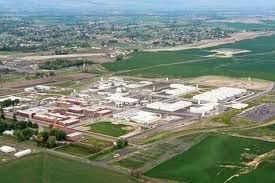
Wish I had more for ya... but this is it so far... except for a few old plans from 2008...
By JOURNAL STAFFAugust 2, 2011
TUMWATER — The state Department of Corrections later this month will open bids for a $28 million to $30 million expansion at the Washington State Penitentiary in Walla Walla.
Work will involve construction of two nearly identical housing units, each about 45,000 square feet with 256 beds. They will house medium-security inmates.
Thursday, May 19, 2011
Our Next-Door Neighbors Are Meth-Lords!
DRUGS: Large meth lab found in Walla Walla motel
By Herald staff
One of the largest active methamphetamine labs in Walla Walla County history was discovered Wednesday evening when the Walla Walla SWAT team searched the Walla Walla Vineyard Inn.
Officers raided the motel 325 E. Main St. at 6 p.m. after the city drug unit developed information that a meth lab was inside one of the rooms, said a news release.
As the officers forced their way in through the front door, Clifford E. Chew, 56, allegedly tried to escape out the back door. He was caught a short distance from his room.
Lab certified officers took apart the equipment without incident and took it to a secure location.
Meth and many other items used to make and distribute the drug were seized from the room.

The SWAT Team was helped by sheriff’s deputies, city patrol officers and the city’s Special Teams Unit.
The number of meth labs in Washington state has dropped dramatically in recent years, with much of the drug coming into the country through Mexico.
Chew is a career criminal with more than 35 felony arrests and convictions for attempted murder, first-degree assault, burglary and numerous drug violations.
He is being held in the Walla Walla County Jail on investigation of manufacturing methamphetamine and several other felony drug-related charges.
Chew also has an absconding warrant out of Umatilla County, Ore., and is currently on Umatilla County’s Most Wanted list.
The motel manager, Dena R. Turner, 37, was also arrested Wednesday night after a large amount of ammonia was found in her freezer.
This is a common ingredient in making of meth. She was jailed on suspicion of complicity to manufacture methamphetamine, a class B felony.

Contamination levels at the motel are unknown at this time, said the release. It is also unknown how long Chew had been cooking meth at the motel.
One SWAT Team member suffered an injured knee during the raid.
Read more: http://www.tri-cityherald.com/2011/05/19/1496037/drugs-large-meth-lab-found-in.html#ixzz1MqYmFUy7
By Herald staff
One of the largest active methamphetamine labs in Walla Walla County history was discovered Wednesday evening when the Walla Walla SWAT team searched the Walla Walla Vineyard Inn.
Officers raided the motel 325 E. Main St. at 6 p.m. after the city drug unit developed information that a meth lab was inside one of the rooms, said a news release.
As the officers forced their way in through the front door, Clifford E. Chew, 56, allegedly tried to escape out the back door. He was caught a short distance from his room.
Lab certified officers took apart the equipment without incident and took it to a secure location.
Meth and many other items used to make and distribute the drug were seized from the room.
The SWAT Team was helped by sheriff’s deputies, city patrol officers and the city’s Special Teams Unit.
The number of meth labs in Washington state has dropped dramatically in recent years, with much of the drug coming into the country through Mexico.
Chew is a career criminal with more than 35 felony arrests and convictions for attempted murder, first-degree assault, burglary and numerous drug violations.
He is being held in the Walla Walla County Jail on investigation of manufacturing methamphetamine and several other felony drug-related charges.
Chew also has an absconding warrant out of Umatilla County, Ore., and is currently on Umatilla County’s Most Wanted list.
The motel manager, Dena R. Turner, 37, was also arrested Wednesday night after a large amount of ammonia was found in her freezer.
This is a common ingredient in making of meth. She was jailed on suspicion of complicity to manufacture methamphetamine, a class B felony.
Contamination levels at the motel are unknown at this time, said the release. It is also unknown how long Chew had been cooking meth at the motel.
One SWAT Team member suffered an injured knee during the raid.
Read more: http://www.tri-cityherald.com/2011/05/19/1496037/drugs-large-meth-lab-found-in.html#ixzz1MqYmFUy7
Saturday, May 7, 2011
Update on West Coast Radiation
If anyone has any other news sources, or references/ideas, anything, please let me know. Thanks!
Wednesday, May 19, 2010
Tri-Cities Librarian Fired

Is this the future of news? Everything in bite-size bits digestible by Twitter-pated caffeine junkies with ten second attention spans? I'll bet if we fired all the cops and hired fifty librarians per town crime would drop substantially.
KENNEWICK, Wash. The executive director of the library system in the Tri-Cities has been fired.
The Tri-City Herald reports the Mid-Columbia Libraries board voted Monday to dismiss Danielle Krol immediately. Chairwoman Gloria Garcia said Krol was dismissed without cause, as allowed by her contract, as the best thing for the library district.
Krol had six months remaining on her contract that pays her $110,000 a year. She's eligible for a six-month severance package of salary and benefits.
Saturday, April 10, 2010
Newsflash! Hanford Continues to Leak Radiation Into Our Groundwater
I know this is old and common news around the valley, but I enjoyed the author's dry, wry tone.
Radioactive insects have been found near Hanford reservation
Richland, in eastern Washington, is the town that Oppenheimer built. Since the dawn of the nuclear age, the town’s largetst employer has been the Hanford nuclear reservation, which has produced virtually all of America’s plutonium. Enough to build the world’s largest nuclear arsenal.
This new industry helped the town flourish, and today about 160,000 people live near the 586 square mile reservation. 53 million gallons of nuclear waste lies buried in 177 underground tanks, each capable of holding 750,000 gallons. Some of the waste dates back to the Manhattan Project of the 1940s, and the 53 million gallons of sludge will continue to be dangerously radioactive for about 240,000 years.

The people of the town developed a sort of gallows humor about their role in the Cold War. The high school football team is called the bombers, and they wear helmets that feature mushroom clouds. But the joke isn’t very funny anymore.
The old tanks of nuclear waste have been leaking for years, releasing as much as 1 million gallons of nuclear waste into the groundwater. Some local plants, cockroaches, wasps, and ants are measurably radioactive. The nuclear waste continues to ooze underground, down toward the nearby Columbia River.
A couple of hundred miles down the Columbia are the cities of Portland and Vancouver, Washington. More than 1 million people drink water from the Columbia. A gigantic hydroelectric plant lies downstream, as well as numerous farms and recreation areas.
In 1987, Hanford stopped making plutonium, and the most expensive containment and cleanup effort in world history began. Politically connected Bechtel Corporation has been building a gigantic facility to process and store the nuclear waste. And now, almost 20 years later, it is beginning again, almost from square one.
Sunday, August 12, 2007
Illahee Resort Bad Business For Walla Walla
Okay, so most of this is my own opinion I suppose, except for the links that is, but this just rings all wrong to me, as an intelligent human being who loves and supports local community and local economy. I mean come on, an out-of-town development corporation comes in, low-bids a chunk of land right next to our water supply, gets a cheaper price than any local residents, sells the first home to the Port Commissioner and wants to start some bourgeois
golf course for out-of-town wine snobs?
There's gotta be a better way to take their money and keep it in our town. Don't they read anything other than books on wine or art? Don't they shop at Earthlight? Don't they realize how cool we are already, without them? Granted, those books do cost a fair deal of money and we do like their money, but why sell out our land and water to another company from another state when we could capitalize on the scenario sustainably and locally and reap a higher percentage of the profits while we personally improve our own amazing town? We have so much history, why spend our heritage in some other store when we have our own silos to fill and share with our neighbors. And ya know what? I just don't wanna look at it every time I drive to my family's cabin that was built in 1919. Plain and simple. Just the way we like it?
Here's some old articles I found, plus one new one. Sorry if any of the info is wrong now, I've just been pissed for awhile and stockpiling ammo. Sometimes, if the revolution takes a spell or two, the ammo gets rusty, or the spell fails to be cast.
Walla Walla 2020's website
Walla Walla 2020 keeps eye on area - this one's actually good news, I guess, especially since the UB printed it!
New Golf Project Slated For Walla Walla
Jacobsen Hardy to Commence Work on Walla Walla Course
‘Don’t Bend Walla Walla,’ locals argue
Walla Walla doesn't want to be like Bend
The Town That Doesn't Want to Bend: Walla Walla citizens see Bend as a model of how not to grow
Here's Abito's Website
more to follow, thanks for staying tuned over the tedious months
golf course for out-of-town wine snobs?
There's gotta be a better way to take their money and keep it in our town. Don't they read anything other than books on wine or art? Don't they shop at Earthlight? Don't they realize how cool we are already, without them? Granted, those books do cost a fair deal of money and we do like their money, but why sell out our land and water to another company from another state when we could capitalize on the scenario sustainably and locally and reap a higher percentage of the profits while we personally improve our own amazing town? We have so much history, why spend our heritage in some other store when we have our own silos to fill and share with our neighbors. And ya know what? I just don't wanna look at it every time I drive to my family's cabin that was built in 1919. Plain and simple. Just the way we like it?
Here's some old articles I found, plus one new one. Sorry if any of the info is wrong now, I've just been pissed for awhile and stockpiling ammo. Sometimes, if the revolution takes a spell or two, the ammo gets rusty, or the spell fails to be cast.
Walla Walla 2020's website
Walla Walla 2020 keeps eye on area - this one's actually good news, I guess, especially since the UB printed it!
New Golf Project Slated For Walla Walla
Jacobsen Hardy to Commence Work on Walla Walla Course
‘Don’t Bend Walla Walla,’ locals argue
Walla Walla doesn't want to be like Bend
The Town That Doesn't Want to Bend: Walla Walla citizens see Bend as a model of how not to grow
Here's Abito's Website
more to follow, thanks for staying tuned over the tedious months
Wednesday, May 16, 2007
More Dirt on Hanford
I thought some of you folks researching Hanford would find some of this information interesting, from a post of mine on Pirate Papa earlier today.
The Real Costs of Nuclear War: Radioactive Breastmilk, Birth Defects, Contaminated Food Chains
Thursday, March 29, 2007
GNEP Hearing Hood River, OR March 26, 2007 Report: Great Success
The turnout was fabulous given the 13 day notice we had for this hearing. At 6PM 120 people were in attendance as USDOE began its presentations. At least 30, and as many as 50 additional people came, filling the room and with a large standing group in back. Many people thanked Natalie and I for phone calls from Heart of America Northwest (CRK gave us a list of around 200 members of theirs to call, and we reached many of them in addition to the Heart of America members in the Gorge / Portland area).
TRIDEC did bring a bus with GNEP supporters down from the Tri-Cities. TRIDEC is the Hanford contractor group which is both the “applicant” proposing GNEP for Hanford, and the grantee given over $1 million by USDOE to study the site and report on regional stakeholder concerns. They seemed surprised that we had such a strong turnout, and prevented them from having their pro-GNEP / pro-FFTF reactor message on equal terms. Several of them commented to me that the opponents were articulate and well informed, while others called names and made threats.
Many thanks to all the concerned citizens and groups’ representatives who came – with wonderful statements.
Media coverage was excellent: OPB (NPR affiliate) ran a news story throughout the afternoon with our concerns about trucking High-Level Nuclear Waste through Portland and the Gorge, reprocessing and lack of openness. Hood River news ran article from news release put out by Natalie, and two of the three main Portland TV stations responded to the news release by sending crews all the way to Hood River (60 miles up the Columbia Gorge) – which has never happened before for any hearing.
USDOE opened the hearing with its standard presentation and Powerpoint slide show on GNEP – used at all the GNEP hearings. This touts the wonders of nuclear power, the benefits of reprocessing Spent Fuel (“recycling”), and has only two slides about generic facilities being considered for applicant sites, with no specific information.
Following the presentation, I (politely) raised a point of information inquiring why USDOE had not presented a single detail about what facilities and wastes were proposed for Hanford, e.g., how much Spent Nuclear Fuel would be imported, what size and number of reprocessing facilities were proposed (and whether use of old, contaminated facilities was proposed)... since USDOE’s own slides stated that the point of a “scoping” hearing was for the public to provide input on the scope of impacts to be studied from the proposal. This was greeted by GNEP FFTF supporters cat calls and one big guy standing up to threaten to make me sit down. Scores of other attendees then applauded and called on USDOE to answer why there was no information, and demanded to know how we were expected to comment without disclosure. A lame answer came from a USDOE official who said they would provide those details in a few months, after TRIDEC did its “siting study”. Numerous citizens pointed out that this would deny them their chance to comment on the scope. The official, if I heard correctly, said they would respond.
GREAT Opening Comments by Oregon and Senator Wyden:
The State of Oregon’s Ken Niles was the first speaker. The State’s position is very strong against GNEP: “it is lunacy”. The State opposes siting GNEP at Hanford, noting “skepticism”about USDOE’s “amazing claims” that USDOE could make reprocessing work, would reduce wastes – when, in fact, reprocessing would add more wastes to Hanford.
This was loudly applauded.
The Yakama Nation’s speaker noted the need for consultation with the Tribe before USDOE could proceed and objected to such use of ceded lands without cleanup.
Senator Wyden’s statement opposing GNEP and siting GNEP at Hanford was very strong and loudly applauded (delivered very well by Mary Gautreaux). In fact, at least three citizens quoted from it in their testimony later in the evening.... especially the line that reprocessing was like King Midas on steroids, and everything touched by reprocessing would be radioactive and become waste requiring cleanup on top of all the wastes already at Hanford.
Tri-City Benton County Commissioner Claude Oliver also spoke under state and local officials. Oliver has been leading the fight to restart FFTF for years. He referred to using “assets” without saying the words: “FFTF Nuclear Reactor” and “restart.” He played well by appreciating the turnout and saying this would be so much better of a forum if there were scientific experts at the front of the room who would answer the public’s questions, instead of just having USDOE officials sitting there without responding. Claude Oliver insinuated that there would be developments coming out of the study... but he offered no info on what was being proposed despite being on the team.
Public comment was then limited to 2 minutes per speaker – due to the number signed up and to the fact that the Hood River – White Salmon bridge across the River was closing at 9:30 due to construction. Testimony was very articulate despite the limit. Many people thanked our groups (CRK, PSR, HoA) for providing them with information which was not otherwise available... one man noting that he had to “donate to Heart of America Northwest to protect him from his own government.”
themes of opponents:
- cleanup first;
- Honor the public’s vote for Initiative 297 and public sentiment against adding any new wastes to Hanford when USDOE has not been able to cleanup what is already there;
- Public relations gimmick “glib terminology” calling chemical processing of spent fuel “recycling” only increased distrust;
- Transporting Spent Nuclear Fuel had serious risks – including terrorists as well as accidents and unnecessary radiation exposures along routes. Keep SNF at reactors.
- Terrorist risks for facilities at Hanford would increase;
- Groundwater and River impacts from making more wastes and disposing of them at Hanford;
- Invest same funding in renewable, sustainable energy and conservation would get far more done for energy independence. This was called on to be studied as a reasonable alternative.
- Calling nuclear power “clean” for Global Warming is like calling coal clean because it doesn’t release radiation.
- Where would waste from overseas be imported... study impacts and hold hearings in each potential port and each transportation route.
- Incredible waste of funds for GNEP in hundreds of millions for this year and proposed for next year.
- Cleanup funds diminishing at same time USDOE wants to create more waste.
- vitrification plant is $8 billion over budget and decades behind for just half the liquid High-Level Nuclear Wastes at Hanford, while USDOE wants to create more.
- Reprocessing not cost effective in France and serous problems
- Reprocessing sets bad precedent for other nations to reprocess and extract weapons usable Plutonium and Uranium.
- Reprocessing actually increases volume of waste even if less goes to repository. This is just a way for USDOE and nuclear utilities to get around lack of repository.
- Many thanked State of Oregon and Senator Wyden;
- lack of notice from USDOE of this hearing... including from two local officials.
Proponents:
- FFTF Reactor a valuable asset, its use would save billions from building a new Advanced Burner Reactor;
- FFTF Reactor can be restarted safely and make medical isotopes... cure cancer...
- US needs nuclear... if US doesn’t build more nuclear plants we will no longer be a ‘world power”
- France and Britain reprocess and leave us behind, can be done safely.
- Reprocessing is non-proliferation
- Decrease the volume of radioactive waste
- Hanford best place to reprocess and already has FFTF (not as much of this as at Pasco hearing, of course)
- Anti GNEP people are “hysterical”... Heart of America should “get a heart” instead of opposing cure for cancer.
- Oregon should welcome reprocessing of Spent Fuel stored at Trojan... bet Oregon would want to send its Spent Fuel to Hanford for reprocessing.
- alternative energy can not meet energy demand.
Last note: USDOE apparently asked for security at the hearing. There were several private security guards present. This bears watching. At the FFTF restart hearings, USDOE made claim that police and security, including undercover, was needed due to claimed threats from citizen group. Obviously, there were no such threats about this hearing (nor about the FFTF... but, there the only violence came from FFTF supporters assaulting us).
43 people filled out “ballots” developed by Angela of Oregon PSR on GNEP and USDOE’s priorities. Good way to gather additional comments for submission. We will submit them all.
Gordon Sturrock of Vets for Peace from Eugene posted this debrief, and has photos on their website:
Another trip to speak out against the proposed GNEP (Global Nuclear Exchange
Program), this time to Hood River, Oregon where the bussed-in pro-nuke crowd
was severely out-numbered. The tables had turned from the previous meeting
which took place in Pasco, Washington, home base of the selfish nuclear
scientists and workers who clearly were more interested in putting their own
financial welfare ahead of the health and safety of their fellow humans
beings all along the Columbia River and the entire Pacific Northwest...
PICTURES AND FULL REPORT INCLUDING STATEMENT FROM SENATOR RON WYDEN AT THIS
LINK:
http://www.squadron13.com/deployed/070326HoodRiver/
TRIDEC did bring a bus with GNEP supporters down from the Tri-Cities. TRIDEC is the Hanford contractor group which is both the “applicant” proposing GNEP for Hanford, and the grantee given over $1 million by USDOE to study the site and report on regional stakeholder concerns. They seemed surprised that we had such a strong turnout, and prevented them from having their pro-GNEP / pro-FFTF reactor message on equal terms. Several of them commented to me that the opponents were articulate and well informed, while others called names and made threats.
Many thanks to all the concerned citizens and groups’ representatives who came – with wonderful statements.
Media coverage was excellent: OPB (NPR affiliate) ran a news story throughout the afternoon with our concerns about trucking High-Level Nuclear Waste through Portland and the Gorge, reprocessing and lack of openness. Hood River news ran article from news release put out by Natalie, and two of the three main Portland TV stations responded to the news release by sending crews all the way to Hood River (60 miles up the Columbia Gorge) – which has never happened before for any hearing.
USDOE opened the hearing with its standard presentation and Powerpoint slide show on GNEP – used at all the GNEP hearings. This touts the wonders of nuclear power, the benefits of reprocessing Spent Fuel (“recycling”), and has only two slides about generic facilities being considered for applicant sites, with no specific information.
Following the presentation, I (politely) raised a point of information inquiring why USDOE had not presented a single detail about what facilities and wastes were proposed for Hanford, e.g., how much Spent Nuclear Fuel would be imported, what size and number of reprocessing facilities were proposed (and whether use of old, contaminated facilities was proposed)... since USDOE’s own slides stated that the point of a “scoping” hearing was for the public to provide input on the scope of impacts to be studied from the proposal. This was greeted by GNEP FFTF supporters cat calls and one big guy standing up to threaten to make me sit down. Scores of other attendees then applauded and called on USDOE to answer why there was no information, and demanded to know how we were expected to comment without disclosure. A lame answer came from a USDOE official who said they would provide those details in a few months, after TRIDEC did its “siting study”. Numerous citizens pointed out that this would deny them their chance to comment on the scope. The official, if I heard correctly, said they would respond.
GREAT Opening Comments by Oregon and Senator Wyden:
The State of Oregon’s Ken Niles was the first speaker. The State’s position is very strong against GNEP: “it is lunacy”. The State opposes siting GNEP at Hanford, noting “skepticism”about USDOE’s “amazing claims” that USDOE could make reprocessing work, would reduce wastes – when, in fact, reprocessing would add more wastes to Hanford.
This was loudly applauded.
The Yakama Nation’s speaker noted the need for consultation with the Tribe before USDOE could proceed and objected to such use of ceded lands without cleanup.
Senator Wyden’s statement opposing GNEP and siting GNEP at Hanford was very strong and loudly applauded (delivered very well by Mary Gautreaux). In fact, at least three citizens quoted from it in their testimony later in the evening.... especially the line that reprocessing was like King Midas on steroids, and everything touched by reprocessing would be radioactive and become waste requiring cleanup on top of all the wastes already at Hanford.
Tri-City Benton County Commissioner Claude Oliver also spoke under state and local officials. Oliver has been leading the fight to restart FFTF for years. He referred to using “assets” without saying the words: “FFTF Nuclear Reactor” and “restart.” He played well by appreciating the turnout and saying this would be so much better of a forum if there were scientific experts at the front of the room who would answer the public’s questions, instead of just having USDOE officials sitting there without responding. Claude Oliver insinuated that there would be developments coming out of the study... but he offered no info on what was being proposed despite being on the team.
Public comment was then limited to 2 minutes per speaker – due to the number signed up and to the fact that the Hood River – White Salmon bridge across the River was closing at 9:30 due to construction. Testimony was very articulate despite the limit. Many people thanked our groups (CRK, PSR, HoA) for providing them with information which was not otherwise available... one man noting that he had to “donate to Heart of America Northwest to protect him from his own government.”
themes of opponents:
- cleanup first;
- Honor the public’s vote for Initiative 297 and public sentiment against adding any new wastes to Hanford when USDOE has not been able to cleanup what is already there;
- Public relations gimmick “glib terminology” calling chemical processing of spent fuel “recycling” only increased distrust;
- Transporting Spent Nuclear Fuel had serious risks – including terrorists as well as accidents and unnecessary radiation exposures along routes. Keep SNF at reactors.
- Terrorist risks for facilities at Hanford would increase;
- Groundwater and River impacts from making more wastes and disposing of them at Hanford;
- Invest same funding in renewable, sustainable energy and conservation would get far more done for energy independence. This was called on to be studied as a reasonable alternative.
- Calling nuclear power “clean” for Global Warming is like calling coal clean because it doesn’t release radiation.
- Where would waste from overseas be imported... study impacts and hold hearings in each potential port and each transportation route.
- Incredible waste of funds for GNEP in hundreds of millions for this year and proposed for next year.
- Cleanup funds diminishing at same time USDOE wants to create more waste.
- vitrification plant is $8 billion over budget and decades behind for just half the liquid High-Level Nuclear Wastes at Hanford, while USDOE wants to create more.
- Reprocessing not cost effective in France and serous problems
- Reprocessing sets bad precedent for other nations to reprocess and extract weapons usable Plutonium and Uranium.
- Reprocessing actually increases volume of waste even if less goes to repository. This is just a way for USDOE and nuclear utilities to get around lack of repository.
- Many thanked State of Oregon and Senator Wyden;
- lack of notice from USDOE of this hearing... including from two local officials.
Proponents:
- FFTF Reactor a valuable asset, its use would save billions from building a new Advanced Burner Reactor;
- FFTF Reactor can be restarted safely and make medical isotopes... cure cancer...
- US needs nuclear... if US doesn’t build more nuclear plants we will no longer be a ‘world power”
- France and Britain reprocess and leave us behind, can be done safely.
- Reprocessing is non-proliferation
- Decrease the volume of radioactive waste
- Hanford best place to reprocess and already has FFTF (not as much of this as at Pasco hearing, of course)
- Anti GNEP people are “hysterical”... Heart of America should “get a heart” instead of opposing cure for cancer.
- Oregon should welcome reprocessing of Spent Fuel stored at Trojan... bet Oregon would want to send its Spent Fuel to Hanford for reprocessing.
- alternative energy can not meet energy demand.
Last note: USDOE apparently asked for security at the hearing. There were several private security guards present. This bears watching. At the FFTF restart hearings, USDOE made claim that police and security, including undercover, was needed due to claimed threats from citizen group. Obviously, there were no such threats about this hearing (nor about the FFTF... but, there the only violence came from FFTF supporters assaulting us).
43 people filled out “ballots” developed by Angela of Oregon PSR on GNEP and USDOE’s priorities. Good way to gather additional comments for submission. We will submit them all.
Gordon Sturrock of Vets for Peace from Eugene posted this debrief, and has photos on their website:
Another trip to speak out against the proposed GNEP (Global Nuclear Exchange
Program), this time to Hood River, Oregon where the bussed-in pro-nuke crowd
was severely out-numbered. The tables had turned from the previous meeting
which took place in Pasco, Washington, home base of the selfish nuclear
scientists and workers who clearly were more interested in putting their own
financial welfare ahead of the health and safety of their fellow humans
beings all along the Columbia River and the entire Pacific Northwest...
PICTURES AND FULL REPORT INCLUDING STATEMENT FROM SENATOR RON WYDEN AT THIS
LINK:
http://www.squadron13.com/deployed/070326HoodRiver/
Wednesday, March 21, 2007
Hanford High-Level Nuclear Waste Import scheme (GNEP) - Tri-City Herald article acknowledges message of WA voters on I-297 is obstacle, now trying...
...to claim no liquid High-Level Wastes
Date: Sat, 17 Mar 2007 13:08:28 -0700
Can't attend? Send in your comments today to address at bottom of article (and be sure to ask USDOE to send you a response and to add you to mailing list)!
TRIDEC says Hanford reservation good site for nuclear fuel recycling
Date: Sat, 17 Mar 2007 13:08:28 -0700
TRIDEC's public relations drumbeat for GNEP at Hanford, including import of Spent Nuclear Fuel and reprocessing... continues in the Tri-City Herald (article below). Note that the article acknowledges Washington's voters overwhelming message of I-297 (cleanup before being allowed to add more waste) stands in way. The claim made that liquid High-Level Nuclear Waste will not be "stored" on site is false -- reprocessing creates liquid High-Level Nuclear Waste. They parse words by claiming they will turn it into a solid. But, Hanford is, at best, 12 years away from being able to prove it can glassify any liquid High-Level Nuclear Waste (and just $8 billion over budget for a plant which will only handle half the volume in Hanford's existing tanks). They can't truck the liquid High-Level Nuclear Waste offsite. So, where will it be vitrified??? Expect them to say they will add another vitrification facility.... while the GNEP national proposal calls for other extremely radioactive solid wastes to be buried onsite, adding to the long-term contamination threat. See fact sheets on the Heart of America Northwest website for detailed citations showing liquid High-level Nuclear Waste results from reprocessing as proposed. Bear in mind that the Tri-City Herald publisher sits on the board and executive committee of TRIDEC, and this is TRIDEC's proposal.
Mark your calendar for Monday, March 26th Hood River Best Western 6PM for the only other hearing on this proposal in the Northwest. That's just one hour away from Portland. The Hotel is visible from I-84 at the 2nd Hood River exit (heading east). Talking points and detailed fact sheets on the wastes that would be imported and produced from GNEP are available at www.hoanw.org . We have asked that the official Hanford Clean-Up mailing list be mailed notice of the hearing... but, of course, USDOE refuses to do so. So, please forward email and urge your friends and relatives to come... remind them that this involves trucking High-Level Nuclear Waste through Portland and I-84.
Can't attend? Send in your comments today to address at bottom of article (and be sure to ask USDOE to send you a response and to add you to mailing list)!
TRIDEC says Hanford reservation good site for nuclear fuel recycling
Published Saturday, March 17th, 2007 Tri-City Herald
By ANNETTE CARY HERALD STAFF WRITER
The Hanford nuclear reservation offers many benefits other sites cannot match as it competes to be the home of a nuclear fuel recycling program that could bring 8,000 jobs, a top official of the Tri-City Development Council said Friday. Gary Petersen, vice president for Hanford programs, outlined Hanford's possible role in the Global Nuclear Energy Partnership at TRIDEC's annual meeting.
TRIDEC won a $1 million grant to study Hanford as the site of a nuclear fuel recycling center and an advanced burner reactor to use the recycled fuel. As part of that grant, Columbia Basin Consulting Group is studying whether Hanford's Fast Flux Test Facility could be restarted as part of a GNEP research center.
The Bush administration is proposing the project as a way to reduce the amount of used commercial reactor fuel that must be disposed of and to limit expansion of nuclear weapons by limiting the number of countries that would have to enrich or reprocess nuclear fuel for nuclear power.
At the Tri-City level, the project also could solve a potential economic problem. "Just about the time Hanford is ramping down drastically, this could come on line," Petersen said. Cold War production of plutonium at Hanford and the cleanup of massive contamination left behind have been a key driver for the Tri-City economy. But Hanford jobs should decrease as the site is cleaned up. DOE is projecting that the nuclear fuel recycling center, advanced burner reactor and research center would be in full operation by 2020 to 2025, with some work starting earlier.
Hanford has the advantage of being the only place to have on site an operating commercial nuclear power reactor licensed by the Nuclear Regulatory Commission, Petersen said. And using the FFTF, a shut-down research reactor, could speed up the project by many years, he said.
The site also has on DOE land much of the infrastructure the project needs, including lay-down yards for the fuel; buildings built for previous nuclear projects; a sewage treatment plant; power transmission lines; a training center; and roads, railroads and nearby access for barges, he said.
The decision on whether to go forward with the project and where it would be located is to be made by the energy secretary in June 2008, just months before the presidential election. "There's nothing done in June 2008 that the next energy secretary can't change, so it is very important to have broad bipartisan support," said Mike Lawrence of Pacific Northwest National Laboratory, operated by Battelle. Battelle, Areva and Washington Group International are working with TRIDEC on the siting study.
Dealing with concerns about nuclear waste may be an important issue in gaining support. In 2004, Washington voters approved Initiative 297 to bar the Department of Energy from bringing more waste to Hanford until waste already there is cleaned up. Although the initiative was ruled invalid in federal court and remains the subject of legal proceedings, voters made clear what many in the state thought about Hanford waste, including 53 million gallons of liquid and solid radioactive waste stored in underground tanks.
There would be no storage of liquid waste on site under the Global Nuclear Energy Partnership, Lawrence said. One benefit pushed by the Bush administration is that the plant would reduce waste produced by U.S. commercial nuclear reactors by reusing their fuel. Now commercial fuel is used just one time, then stored to eventually be sent to Yucca Mountain, the nation's unopened nuclear repository. Reprocessing would reduce both the toxicity of the waste and also its volume up to 100-fold, Lawrence said. The world might need just five nuclear repositories like Yucca Mountain rather than hundreds, he said.
The recycling process to prepare fuel to be reused would leave excess uranium that would be disposed of or enriched for use again. The process also would separate out some shorter-lived radioactive isotopes such as cesium and strontium that would lose their radioactivity over hundreds rather than thousands of years. All secondary waste from the project would be turned into a solid, Lawrence said. DOE is continuing to take comments on its environmental study of the project. They may be sent until April 4 to Timothy Frazier, GNEP PEIS Document Manager, Office of Nuclear Energy, Department of Energy, 1000 Independence Ave. S.W., Washington, DC 20585-0119, or e-mailed to GNEP-PEIS@nuclear. energy .gov. Mark envelopes and e-mails as "GNEP PEIS Comments."
Tuesday, February 27, 2007
My mom's kick ass letter to the City of Walla Walla
Yeah, my mom pretty much rules. -Sky
February 7, 2007
TO: Walla Walla Comprehensive Planning Steering Committee members
Kim Lyonnais, Director, Walla Walla City Development Services
Walla Walla City Council Members
Peter J. Smith & Company, Consultants
FROM: Judith Cosby, Walla Walla, Washington
IN RESPONSE TO: Your letter of December 28, 2006:
“Dear Neighbor: We need your help in creating the future of Walla Walla. Please join us in January and share your ideas about our city and its future.”
Thank you for your invitation. I took you up on it. I went on two guided walks, two private walks, one private drive, and the trolley tour Saturday, January 27. I attended the Central Historical Neighborhood Public Meeting at St. Paul’s Episcopal Church on January 16. I also attended the grassroots community forum, “How Will the Valley Weather the Wave of Change?” at the Central Christian Church.
Dear City of Walla Walla: Your “Dear Neighbor” letter assures me that the City’s Comprehensive Planning process will “guide city government around issues including population, roads, housing, parks, natural resources, business development, locations of public services and safety for the next 20 years.” You promise me that “this plan will build on our community’s core values, its sense of place, and its relationship to the rest of the Valley.” You tell me that “our planning will focus on what we want to retain as well as what we want to improve.”
Thank you for assuring me that my contribution is welcome and that my voice will be heard.
I have lived in Walla Walla for 44 years. I am a homeowner, taxpayer, and voter. I attended Pioneer Junior High and “WA-HI” and graduated from Whitman College. I am a parent and former teacher (Birth to Six and K-12) and for 20 years was a partner in a Main Street family business. I shop almost exclusively at locally owned stores: attended support local cultural events; most of the art in my home is by local artists; the restaurants and coffee shops I go to are also locally-owned. I have a financial and emotional investment in Walla Walla. This is my home, my hometown, my homeland.
Past choices the City has made that I endorse and thank you for: Curbside Recycling, Yard Waste (and Park Waste, Composting, Bicycle Lanes, the Walla Walla Trail Project,
Heritage Park, Farmers’ Market, Historic Preservation—both public and private, Downtown Art, wheelchair (and baby stroller) accessible sidewalks and crossings downtown, Walla Walla’s beautiful parks and trees, the City Urban Forestry Commission.
Many thanks to Walla Walla 2020 for their nearly two decades of advocacy and hard work, without which, much of the above list would not have happened. I especially appreciate Walla Walla 2020’s lovely Xeriscape Demonstration Garden at Rose and Isaacs streets. I am grateful to local taxpayers and the school district for the beautiful restoration and compatible new construction of Sharpstein and Green Park schools. I am very grateful to the City for the two aquifer recharge wells. I agree with John Winter’s article in the Union-Bulletin January 15, 2007 that water for Illahee should be supplied by the City rather than the Port.
THIS IS MY WISH LIST:
1. Street repair and maintenance * * *
2. Affordable entry level housing * * *
3. Sidewalks—especially to and from schools.
4. Trees! Trees! Trees! Saving healthy trees we already have, planting trees to replace cumulative loss, requiring trees for new development—residential, business districts, public spaces and parking lots, any new—and most old—industrial sites.
5. Naturalize Mill Creek as much as possible, even if in patchwork pieces and over the long term. Partner with Whitman College Science Department and with Walla Walla Community College’s new Water and the Environment program.on this and other water issues.
6. Emphasize and encourage Xeriscape landscaping and gardening—both public and private.
7. More native wildflowers, please.
8. I like the idea of extending Mill Creek Trail from Rooks Park to Whitman Mission.
9. Reinstate Board of Adjustment—local citizen representation.
10. I would like to praise the new condos on Eagon Street and recommend them as a model for “In Fill”, new compatible construction within the city limits.
11. Eastgate: A more attractive entrance to town (partially in progress now).
12. Downtown: Encourage window boxes and hanging plants. Encourage murals. Parking garages—I would prefer two or three three-story garages to one or two taller structures. Behind Macy’s would be one excellent site, as would be Rose Street lot and the lot at 2nd and Sumach (across from the Post Office). Encourage roof-top gardens on any tall new buildings.
13. South Side: Streams are an asset! Are meandering sidewalks and bike paths possible? The incorporation of public green spaces for any new developments?
14. Establish, incorporate into the city building code, and enforce community historical and new compatible construction standards for residential, business and public buildings. Especially for the Historic Center, but as much as possible city-wide. Already present eyesores: The huge residential garage at Poplar and Alder (across from the back of Carnegie Center); the downtown Subway Shop sign; the canary yellow tasting room downtown; the atrocious garish green color of the new Public Library addition. (The new apartment/duplex across from Green Park School looks better than I thought it would.) I appreciate the community and volunteer effort that went into the Pioneer Park playground, but the colors of the new playground equipment at Sharpstein School (tan and dark green) would have been much more appropriate to our Victorian gem of a park. Possibly partner with Art Walla and our Historical Society for future projects.
15. I would rather see development to the north (and taller buildings on the north side of Isaacs, for example) and save as much of our eastern and southern view of the Blue Mountains and foothills as possible.
16. An impossible Dream? A car-free Main Street pedestrian and bicycle esplanade park from Boyer Street to Second Street with a small trolley or golf-cart busses for the elderly and for handicapped access. (Boyer Street to Farmers’ Market would be even better!)
QUESTIONS
Q: A couple of presentations on Floods, Geology and the Walla Walla Valley have been at Whitman College, part of which discussed Mill Creek’s natural channel through town. John Winter (now retired in Hawaii), Kevin Pogue and Bob Carson were among the presenters. Is it possible to get copies of their presentation (especially visuals) and recommendations into the hands of this planning committee, the City, and any consultants that are hired?
Q: Re: Illahee’s golf course. Can the City/County require a chemically free and or Xeriscape golf course? After all, it’s our groundwater.
Q: Why not Blue Mountain Mall and parking lots for a second High School and campus? It would be easy to close off (as fire doors) all entrances but the two main ones, (a major concern of our current campus is security). You’ve got ready-made parking lots and wiring that would accommodate a school cafeteria. A possible partnership with Walla Walla and College Place school districts? If not as a high school, how about a Community Center?
Q: Is an organic community garden possible on top of a parking garage? If not, is it possible somewhere within city limits? Maybe two or three community gardens??
Q: I have read Walla Walla 2020’s White paper on Economic Development and endorse it. Does Walla Walla City Development Services have an economic development policy or mission statement? Please forward me a copy in the enclosed self-addressed envelope.
Q: Is the Port answerable to anyone? Please know I am very enthusiastic about the new rail project! Is there any way for the City to request that the Port focus on the railroad, the airport, and industrial development only and stop all the “promotional” wheeling and dealing”?
Q: I have many questions re: Tourism. One is: I wish fewer advertising dollars were spent trumpeting Walla Walla to the outside world. Is there any way to reallocate the taxpayer dollars portion of these funds to Infrastructure Repair?--at LEAST until we get our streets paved and our bridges replaced??
Q: Outside consultants: Is there any way the City can choose local contractors and consultants instead of the required “lowest Bid”? Investing profits on projects locally re-circulates and helps keep those dollars here at home.
Mistakes outside consultants have brought us in the past:
Walla Walla High School—Energy inefficiency as an art form with its California open campus design totally incompatible with Walla Walla weather realities. (Yes, it’s “pretty”).
Blue Mountain Mall in a Wetlands Area. Don’t even get me started. Yes, it’s pretty , too. (Well, at least inside. But the meadow was prettier and the Mall is practically a ghost-town now.)
Q: Donald Snow is Whitman College’s Environmental Sciences professor. Have City Council members/City Development staff read his article, “Round the next Bend—Economic Opportunity in Rurbia” in the Fall/Winter 2006 journal Oregon Humanities? oregonhum.org
Q: Is it possible to propose a Community Center and/or Homeless Shelter for if/when Wal-Mart, Big 5, ShopKo, Sears, K-Mart or a big-box furniture store move out of town?
Q: The height and size of SUV’s block visibility at many intersections. The Birch Street entrance/exit to St. Mary’s Hospital is a dangerous intersection with very poor visibility due to parking. We need yellow lines, especially eastside of 5th, both sides would be nice. Another example is my own street corner—Juniper at Howard and Park. The southwest corner of Sharpstein (Park and Whitman Streets) needs yellow lines and a four-way stop.
When was the last time these sightlines were assessed by an engineer or a safety inspector?
Q: What are the challenges we encounter in working together to do a better job of Environmental and Natural Resources Protection?
Q: How do we sustain a 20-year plan, or any vision for the future, through repeated staff changes, both elected and hired employees ??
Q: Tell me again why the local Catholic Church had to file an Environmental Impact Statement to tear down and rebuild one building—and yet a 365-acre proposal (resort, hotel, golf course, and 300 houses is exempt ? ? ?
Please know I don’t believe that we can discuss our local economy without also addressing Environmental and Natural Resources Protection, Community Infrastructure (maintenance, repair and replacement), and Social Justice and Fairness. I would strongly encourage active partnerships with Whitman College, Walla Walla Community College and Walla Walla University science departments on all issues pertaining to water and environmental and natural resources protection.
Again and again at your January events I heard people say they wanted neighborhoods with three-lined streets, entry level housing, infrastructure—especially street repair. Many people asked for neighborhoods that reflect our diversity, old-fashioned human-scale houses, protecting our old trees and planting many more trees, more family-owned businesses, locally-owned businesses, protected farmland, value-added crops, more organic farms, a sustainable homegrown economy.
I’d also like to submit the following for your deliberation: “Cut Up the World” from the book Earthsearch, by John Cassidy:
"Cut an apple into quarters.
Put aside three of the quarters. What do these represent? THe oceans of our world, the Blue Planet.
The fraction left is 1/4. Slice it in half. Set aside one of the halves. This is the part that people can't live or work on. The poles, deserts, swamps, high mountains, etc.
What's left? 1/8. This is where the humans live, but not necessarily where they grow their food.
Slice your 1/8th piece into four sections. Put aside three of them. What's left? 1/32.
The three pieces you set aside represent the places wher the soil is too poor to farm - where it's too rocky, wet, cold or steep to produce food. They also represent the cities, houses highways, shopping malls, schools, parks, factories, parking lots, and miniture golf courses where people live, play and work - but do not grow any food.
Take your 1/32 piece that's left. Carefully peel it. Look at this scrap of apple peel. It represents the farmable surface topsoil of the planet, the thin skin of the thin skin of the Earth's crust upon which humankind totally depends. It is less than 5 feet deep and it is quite a fixed amount of food-producing land.
You may now eat the rest of the apple, but carefully save this tiny piece of apple skin. Treat it as if your life depends on it."
This may be a “County” issue rather than “City”—but please, do whatever you can with local citizen groups and our County officials to protect our countryside and fertile fields.
Thank you for your time and your consideration in these matters.
Sincerely,
Judith Cosby
P.S.
About a dozen years ago I was on one of four committees working on just what you are asking for now: citizen input on a 20-year plan for our community. Growth Management Act Planning Committees devoted hours and hours to debate, research, fact-finding, discussion, compromise and consensus-building. (For details, contact Darcy Fugman-Small) The committees consisted of farmers, homeowners, environ-mentalists, real estate agents, fishermen, County Planning Commission and Port of Walla Walla.
We had a 20 year plan. After 10 to 15 years and mostly behind our backs, all of that changed with a wink and a handshake; our (formerly) mutually-agreed-upon Urban Growth Boundary was ignored and completely redrawn to accommodate the Illahee resort/luxury homes/golf course development by Bend, Oregon’s Pennbrook Homes.
Also, Michael Murr’s luxurious vacation home/retirement home and vineyard are all welcome in our agriculture-exclusive area, but our “Community Leaders” should have insisted that at least his tasting room belonged downtown. Michael Murr knew what the zoning was on that parcel when he bought it, but he gambled that his wealth, power, and prestige would buy him a variance.
Turns out he was right.
The 2007 Public Meeting coordinators remind me that “that was then, this is now” and “that was the County, this is the City”—but you need to understand that hundreds of loyal long-term residents and citizens feel betrayed by the actions of the Port and our elected officials.
I have a simple request: that all committee members and hired consultants read Walla Walla 2020’s White Paper on Economic Development and WW2020’s list of major accomplishments. Please listen.
Not only to Walla Walla 2020, but also to our Citizens for Good Governance, the Grandmothers’ Roundtable, our Children’s Forum, and Walla Walla Watershed Alliance.
All along we’ve been giving you citizen input . . . What we need now are decision-makers who pay attention.
Thank you for your publicity about these on-going events and for encouraging greater community involvement.
cc: Citizens for Good Governance, Grandmothers’ Roundtable, WW2020, Riding the Wave
February 7, 2007
TO: Walla Walla Comprehensive Planning Steering Committee members
Kim Lyonnais, Director, Walla Walla City Development Services
Walla Walla City Council Members
Peter J. Smith & Company, Consultants
FROM: Judith Cosby, Walla Walla, Washington
IN RESPONSE TO: Your letter of December 28, 2006:
“Dear Neighbor: We need your help in creating the future of Walla Walla. Please join us in January and share your ideas about our city and its future.”
Thank you for your invitation. I took you up on it. I went on two guided walks, two private walks, one private drive, and the trolley tour Saturday, January 27. I attended the Central Historical Neighborhood Public Meeting at St. Paul’s Episcopal Church on January 16. I also attended the grassroots community forum, “How Will the Valley Weather the Wave of Change?” at the Central Christian Church.
Dear City of Walla Walla: Your “Dear Neighbor” letter assures me that the City’s Comprehensive Planning process will “guide city government around issues including population, roads, housing, parks, natural resources, business development, locations of public services and safety for the next 20 years.” You promise me that “this plan will build on our community’s core values, its sense of place, and its relationship to the rest of the Valley.” You tell me that “our planning will focus on what we want to retain as well as what we want to improve.”
Thank you for assuring me that my contribution is welcome and that my voice will be heard.
I have lived in Walla Walla for 44 years. I am a homeowner, taxpayer, and voter. I attended Pioneer Junior High and “WA-HI” and graduated from Whitman College. I am a parent and former teacher (Birth to Six and K-12) and for 20 years was a partner in a Main Street family business. I shop almost exclusively at locally owned stores: attended support local cultural events; most of the art in my home is by local artists; the restaurants and coffee shops I go to are also locally-owned. I have a financial and emotional investment in Walla Walla. This is my home, my hometown, my homeland.
Past choices the City has made that I endorse and thank you for: Curbside Recycling, Yard Waste (and Park Waste, Composting, Bicycle Lanes, the Walla Walla Trail Project,
Heritage Park, Farmers’ Market, Historic Preservation—both public and private, Downtown Art, wheelchair (and baby stroller) accessible sidewalks and crossings downtown, Walla Walla’s beautiful parks and trees, the City Urban Forestry Commission.
Many thanks to Walla Walla 2020 for their nearly two decades of advocacy and hard work, without which, much of the above list would not have happened. I especially appreciate Walla Walla 2020’s lovely Xeriscape Demonstration Garden at Rose and Isaacs streets. I am grateful to local taxpayers and the school district for the beautiful restoration and compatible new construction of Sharpstein and Green Park schools. I am very grateful to the City for the two aquifer recharge wells. I agree with John Winter’s article in the Union-Bulletin January 15, 2007 that water for Illahee should be supplied by the City rather than the Port.
THIS IS MY WISH LIST:
1. Street repair and maintenance * * *
2. Affordable entry level housing * * *
3. Sidewalks—especially to and from schools.
4. Trees! Trees! Trees! Saving healthy trees we already have, planting trees to replace cumulative loss, requiring trees for new development—residential, business districts, public spaces and parking lots, any new—and most old—industrial sites.
5. Naturalize Mill Creek as much as possible, even if in patchwork pieces and over the long term. Partner with Whitman College Science Department and with Walla Walla Community College’s new Water and the Environment program.on this and other water issues.
6. Emphasize and encourage Xeriscape landscaping and gardening—both public and private.
7. More native wildflowers, please.
8. I like the idea of extending Mill Creek Trail from Rooks Park to Whitman Mission.
9. Reinstate Board of Adjustment—local citizen representation.
10. I would like to praise the new condos on Eagon Street and recommend them as a model for “In Fill”, new compatible construction within the city limits.
11. Eastgate: A more attractive entrance to town (partially in progress now).
12. Downtown: Encourage window boxes and hanging plants. Encourage murals. Parking garages—I would prefer two or three three-story garages to one or two taller structures. Behind Macy’s would be one excellent site, as would be Rose Street lot and the lot at 2nd and Sumach (across from the Post Office). Encourage roof-top gardens on any tall new buildings.
13. South Side: Streams are an asset! Are meandering sidewalks and bike paths possible? The incorporation of public green spaces for any new developments?
14. Establish, incorporate into the city building code, and enforce community historical and new compatible construction standards for residential, business and public buildings. Especially for the Historic Center, but as much as possible city-wide. Already present eyesores: The huge residential garage at Poplar and Alder (across from the back of Carnegie Center); the downtown Subway Shop sign; the canary yellow tasting room downtown; the atrocious garish green color of the new Public Library addition. (The new apartment/duplex across from Green Park School looks better than I thought it would.) I appreciate the community and volunteer effort that went into the Pioneer Park playground, but the colors of the new playground equipment at Sharpstein School (tan and dark green) would have been much more appropriate to our Victorian gem of a park. Possibly partner with Art Walla and our Historical Society for future projects.
15. I would rather see development to the north (and taller buildings on the north side of Isaacs, for example) and save as much of our eastern and southern view of the Blue Mountains and foothills as possible.
16. An impossible Dream? A car-free Main Street pedestrian and bicycle esplanade park from Boyer Street to Second Street with a small trolley or golf-cart busses for the elderly and for handicapped access. (Boyer Street to Farmers’ Market would be even better!)
QUESTIONS
Q: A couple of presentations on Floods, Geology and the Walla Walla Valley have been at Whitman College, part of which discussed Mill Creek’s natural channel through town. John Winter (now retired in Hawaii), Kevin Pogue and Bob Carson were among the presenters. Is it possible to get copies of their presentation (especially visuals) and recommendations into the hands of this planning committee, the City, and any consultants that are hired?
Q: Re: Illahee’s golf course. Can the City/County require a chemically free and or Xeriscape golf course? After all, it’s our groundwater.
Q: Why not Blue Mountain Mall and parking lots for a second High School and campus? It would be easy to close off (as fire doors) all entrances but the two main ones, (a major concern of our current campus is security). You’ve got ready-made parking lots and wiring that would accommodate a school cafeteria. A possible partnership with Walla Walla and College Place school districts? If not as a high school, how about a Community Center?
Q: Is an organic community garden possible on top of a parking garage? If not, is it possible somewhere within city limits? Maybe two or three community gardens??
Q: I have read Walla Walla 2020’s White paper on Economic Development and endorse it. Does Walla Walla City Development Services have an economic development policy or mission statement? Please forward me a copy in the enclosed self-addressed envelope.
Q: Is the Port answerable to anyone? Please know I am very enthusiastic about the new rail project! Is there any way for the City to request that the Port focus on the railroad, the airport, and industrial development only and stop all the “promotional” wheeling and dealing”?
Q: I have many questions re: Tourism. One is: I wish fewer advertising dollars were spent trumpeting Walla Walla to the outside world. Is there any way to reallocate the taxpayer dollars portion of these funds to Infrastructure Repair?--at LEAST until we get our streets paved and our bridges replaced??
Q: Outside consultants: Is there any way the City can choose local contractors and consultants instead of the required “lowest Bid”? Investing profits on projects locally re-circulates and helps keep those dollars here at home.
Mistakes outside consultants have brought us in the past:
Walla Walla High School—Energy inefficiency as an art form with its California open campus design totally incompatible with Walla Walla weather realities. (Yes, it’s “pretty”).
Blue Mountain Mall in a Wetlands Area. Don’t even get me started. Yes, it’s pretty , too. (Well, at least inside. But the meadow was prettier and the Mall is practically a ghost-town now.)
Q: Donald Snow is Whitman College’s Environmental Sciences professor. Have City Council members/City Development staff read his article, “Round the next Bend—Economic Opportunity in Rurbia” in the Fall/Winter 2006 journal Oregon Humanities? oregonhum.org
Q: Is it possible to propose a Community Center and/or Homeless Shelter for if/when Wal-Mart, Big 5, ShopKo, Sears, K-Mart or a big-box furniture store move out of town?
Q: The height and size of SUV’s block visibility at many intersections. The Birch Street entrance/exit to St. Mary’s Hospital is a dangerous intersection with very poor visibility due to parking. We need yellow lines, especially eastside of 5th, both sides would be nice. Another example is my own street corner—Juniper at Howard and Park. The southwest corner of Sharpstein (Park and Whitman Streets) needs yellow lines and a four-way stop.
When was the last time these sightlines were assessed by an engineer or a safety inspector?
Q: What are the challenges we encounter in working together to do a better job of Environmental and Natural Resources Protection?
Q: How do we sustain a 20-year plan, or any vision for the future, through repeated staff changes, both elected and hired employees ??
Q: Tell me again why the local Catholic Church had to file an Environmental Impact Statement to tear down and rebuild one building—and yet a 365-acre proposal (resort, hotel, golf course, and 300 houses is exempt ? ? ?
Please know I don’t believe that we can discuss our local economy without also addressing Environmental and Natural Resources Protection, Community Infrastructure (maintenance, repair and replacement), and Social Justice and Fairness. I would strongly encourage active partnerships with Whitman College, Walla Walla Community College and Walla Walla University science departments on all issues pertaining to water and environmental and natural resources protection.
Again and again at your January events I heard people say they wanted neighborhoods with three-lined streets, entry level housing, infrastructure—especially street repair. Many people asked for neighborhoods that reflect our diversity, old-fashioned human-scale houses, protecting our old trees and planting many more trees, more family-owned businesses, locally-owned businesses, protected farmland, value-added crops, more organic farms, a sustainable homegrown economy.
I’d also like to submit the following for your deliberation: “Cut Up the World” from the book Earthsearch, by John Cassidy:
"Cut an apple into quarters.
Put aside three of the quarters. What do these represent? THe oceans of our world, the Blue Planet.
The fraction left is 1/4. Slice it in half. Set aside one of the halves. This is the part that people can't live or work on. The poles, deserts, swamps, high mountains, etc.
What's left? 1/8. This is where the humans live, but not necessarily where they grow their food.
Slice your 1/8th piece into four sections. Put aside three of them. What's left? 1/32.
The three pieces you set aside represent the places wher the soil is too poor to farm - where it's too rocky, wet, cold or steep to produce food. They also represent the cities, houses highways, shopping malls, schools, parks, factories, parking lots, and miniture golf courses where people live, play and work - but do not grow any food.
Take your 1/32 piece that's left. Carefully peel it. Look at this scrap of apple peel. It represents the farmable surface topsoil of the planet, the thin skin of the thin skin of the Earth's crust upon which humankind totally depends. It is less than 5 feet deep and it is quite a fixed amount of food-producing land.
You may now eat the rest of the apple, but carefully save this tiny piece of apple skin. Treat it as if your life depends on it."
This may be a “County” issue rather than “City”—but please, do whatever you can with local citizen groups and our County officials to protect our countryside and fertile fields.
Thank you for your time and your consideration in these matters.
Sincerely,
Judith Cosby
P.S.
About a dozen years ago I was on one of four committees working on just what you are asking for now: citizen input on a 20-year plan for our community. Growth Management Act Planning Committees devoted hours and hours to debate, research, fact-finding, discussion, compromise and consensus-building. (For details, contact Darcy Fugman-Small) The committees consisted of farmers, homeowners, environ-mentalists, real estate agents, fishermen, County Planning Commission and Port of Walla Walla.
We had a 20 year plan. After 10 to 15 years and mostly behind our backs, all of that changed with a wink and a handshake; our (formerly) mutually-agreed-upon Urban Growth Boundary was ignored and completely redrawn to accommodate the Illahee resort/luxury homes/golf course development by Bend, Oregon’s Pennbrook Homes.
Also, Michael Murr’s luxurious vacation home/retirement home and vineyard are all welcome in our agriculture-exclusive area, but our “Community Leaders” should have insisted that at least his tasting room belonged downtown. Michael Murr knew what the zoning was on that parcel when he bought it, but he gambled that his wealth, power, and prestige would buy him a variance.
Turns out he was right.
The 2007 Public Meeting coordinators remind me that “that was then, this is now” and “that was the County, this is the City”—but you need to understand that hundreds of loyal long-term residents and citizens feel betrayed by the actions of the Port and our elected officials.
I have a simple request: that all committee members and hired consultants read Walla Walla 2020’s White Paper on Economic Development and WW2020’s list of major accomplishments. Please listen.
Not only to Walla Walla 2020, but also to our Citizens for Good Governance, the Grandmothers’ Roundtable, our Children’s Forum, and Walla Walla Watershed Alliance.
All along we’ve been giving you citizen input . . . What we need now are decision-makers who pay attention.
Thank you for your publicity about these on-going events and for encouraging greater community involvement.
cc: Citizens for Good Governance, Grandmothers’ Roundtable, WW2020, Riding the Wave
Subscribe to:
Posts (Atom)