Showing posts with label Reference. Show all posts

Sunday, September 16, 2012

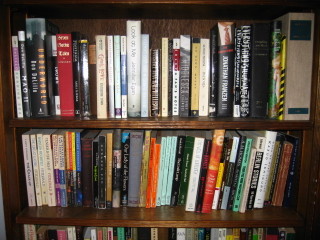
Tips on Caring for Your Books, from Biblio.com


Original Article at Biblio.com


Taking Care of Your Books

You purchased some great books for your collection...now what? Dive into our archives and learn more about preserving and caring for your books.
and more...

Rare and Collectible Books--Care and Preservation
 

Saturday, June 2, 2012

Continuing Research into the Question: Do People Still Read Books? & Other Related Literary Subjects & Statistics


Why do you enjoy reading? What percentage of your reading do you now do online versus hard-copy? 


These questions and many others have been swirling around my brain as of late and led to this post.


Some interesting links and threads... I'm beginning to research changing literacy rates in our country and around the globe... though just because folks can read, doesn't mean they do. Especially when we are constantly bombarded by signage and messages throughout the course of a normal day in society. Without picking up a book, we are subjected to noticing, reading, and processing a vast amount of data, and a lot of it in relatively new formats. 


I read a piece recently about someone who took an amateur survey and just started asking folks to see their digital libraries on their e-readers and pads, and folks would initially claim to read on them and have books... but upon closer inspection a shocking number of libraries were empty, or contained only newspapers and magazines. For shame... I kind of loathe the damn things, and I've still read several books electronically.


After getting bored of my Kindle I just loaded it chock-full of survivalist manuals, .pdfs and apocalyptic reference material of all ilks and crammed it into a 5 gallon bucket with my emergncy gear. Voila! I'll be able to hand-crank charge the sucker and read for a month, educating myself for self-reliance after the bombs drop! :)


If anyone has any interesting book recommendations or little snippets of knowledge, shoot 'em my way, as we're planning on publishing a little pamphlet at Last Word Press eventually on the subject. Send info ATTN: SKY COSBY to lastwordpress@gmail.com and thanks!


http://forum.prisonplanet.com/index.php?topic=202294.0 - Do Young People Still Read Books thread from Prison Planet.

http://answers.yahoo.com/question/index?qid=20110916034546AAADDjm- Do People Still Read Books Anymore? thread from Yahoo.

http://www.boston.com/news/nation/articles/2007/11/19/young_people_reading_a_lot_less/?page=full -

Young people reading a lot less - Report laments the social costs from Boston.com


Wednesday, November 30, 2011

Washington Rural Heritage

Washington Rural Heritage

www.washingtonruralheritage.org

Washington Rural Heritage is a collection of historic materials documenting the early culture, industry, and community life of Washington State. The collection is an ongoing project of small, rural libraries and partnering cultural institutions, guided by an initiative of the Washington State Library (WSL). The initiative provides the infrastructure and training to both digitize and serve unique collections to a widespread audience.

The mission of Washington Rural Heritage is to:
  • Enable small and rural libraries to create digital collections of unique items that highlight institutional holdings and tell the stories of their communities.
  • Make these items accessible online to a wide audience.
  • Provide long-term storage and preservation of digital masters created by WRH participants.
This mission is in line with the larger mission of the Washington State Library to "ensure that Washingtonians have access to the information they need today and the history of Washington tomorrow."
The Project
On-location large-format scanning. Whitman County Library, 2007.
A large number of small and rural public libraries (defined as serving a population of less than 25,000) and other heritage institutions in Washington are in possession of unique, irreplaceable material highlighting the history of their communities. In the majority of instances, these institutions lack staffing, expertise, and resources to make these treasures widely available to the public. The infrastructure to ensure long-term access to online collections is often a major stumbling block for small institutions.
The Washington Rural Heritage initiative shifts focus from funding repetitive projects at individual institutions, to a collaborative model which centralizes infrastructure and supports community projects at the local level.  The initiative provides participating libraries and their partners with training in various aspects of digital project development and management including: selection, copyright research, digital imaging, metadata creation, use of digital asset management software, evaluation & assessment, etc. Initiative staff develop and maintain project standards, guidelines, and best practices.
Washington Rural Heritage also provides on-location services to participating institutions. Traveling staff assist participating institutions with everyday scanning issues, provide specialized scanning on-location (e.g., scanning of-large format items), and train participants in-person.
Collaboration is a critical aspect of the initiative. Identification, research, and cataloging of objects is achieved in a collaborative manner, taking place on-site, within each participating community. Collaboration is encouraged between public libraries and strategic partners such as historical societies, museums, tribes, government agencies, schools, and local subject experts. 
Hudson Bay Company Blockhouse.Stevens County Heritage Collection
The Collections
Washington Rural Heritage collections are made up of items of historical and cultural significance. These include: old photographs, historical texts, memorabilia & ephemera, scrapbooks, maps, artwork, objects & artifacts, etc.  Video and audio files (e.g., oral histories, lectures, interviews) are also part of the online collection. Many of these collections include unique historical resources not previously available in digital format.
The physical collections are housed locally by owning institutions around the state, while the digital collections are housed by the Washington State Library (WSL), a division of the Office of the Secretary of State (OSOS). 
Participating institutions select, scan, and describe items which tell the stories of their communities.
Collections are aggregated into a statewide digital repository—improving access to items across the state, ensuring better consistency across the collections, and providing researchers with the choice to search across multiple collections or limit searches within one collection.  WSL creates a customized landing page for participating institutions, allowing for better integration with their own web presence and online collections or catalogs.
Copyright Considerations
Washington Rural Heritage items that fall under copyright protection remain under copyright protection. The Washington State Library is not interested in gaining copyright ownership or selling copies of the images. All requests for use or reproduction of the images will be referred to the owning institutions. 
In order to preserve digital surrogates and provide long-term access to the collection, the Washington State Library obtains a release from owning institutions to preserve high-resolution copies in long-term “dark” storage, and to provide access to low-resolution (i.e., publication and thumbnail copies) online.
Visit the Washington Rural Heritage legal page for a full copyright statement. 
Advisory Committee
Advisory committee members are made up of volunteers from various institutions (museums, libraries, historical societies, tribes) with expertise in digital collections and repositories, as well as representatives from the established target audiences (historians/researchers, k-12 educators, genealogists, etc.) Committee members will advise on aspects of the project including establishing metadata guidelines, collection selection, insight on use, and discuss other aspects of the project.
Read more at http://www.sos.wa.gov/library/libraries/projects/rural.aspxwww.washingtonruralheritage.org

Saturday, September 3, 2011

Shelf Help: The Best Guides to Book Collecting

Thanks ABE - As usual, we here at Earthlight Books would be more than happy to track down the most affordable, or the most pristine copy of any of these titles. Thanks for your continued readership and support!

by Scott Laming


ABC for Book Collectors
John Carter

At times, even the most knowledgeable collector must seek help in identifying a specific edition or completing their collection. And then there is the legion of people who love books but are baffled by the jargon of the rare book industry.

This selection of key reference books is designed to help beginners and perhaps some advanced collectors too. When it comes to learning about rare books, it is necessary to read more books. We have also included a couple of books that shed a little light on the rare book world itself and give some context to all the terminology.

The single indispensible book for the beginner collector would have to be ABC for Book Collectors by John Carter which contains over 450 terms listed alphabetically. Although ABC for Book Collectors is a reference book, Carter's personality comes through as he explains the terms and often their origins too. An old Etonian, Carter was a former managing director of Scribner's and also worked for Sotheby's. There is a well-thumbed copy of ABC in the AbeBooks' marketing department and it is our main reference tool, but we have heard of veteran booksellers who still refer to this timeless book.

The list includes contributions from rare booksellers David and Natalie Bauman and the late Matthew Bruccoli, a professor of English at the University of South Carolina and renowned F. Scott Fitzgerald expert. Although it is not a reference book, we urge everyone to read A Gentle Madness by Nicholas Basbanes – rarely has anyone described the passion for books in a more perceptive fashion.

Books About Book Collecting:


Collected Books: The Guide to Values 2011 edition

Explains how to identify first editions and also covers Americana, early printed books, literature, mysteries, sci-fi, children's books, natural history, photography, and travel.
Rare Finds: A Guide to Book Collecting by David and Natalie Bauman
Rare Finds: A Guide to Book Collecting
David and Natalie Bauman

A beginner's introduction to book collecting that includes numerous beautiful full color photos from the inventory found in the Baumans' rare bookshops.

Modern Book Collecting by Robert A. Wilson
Modern Book Collecting
Robert A. Wilson

A serviceable introduction to collecting modern editions – the focus is on 20th century authors.

At Home with Books: How Booklovers Live with and Care for Their Libraries by Estelle Ellis
At Home with Books: How Booklovers Live with and Care for Their Libraries
Estelle Ellis

Includes chapters on starting a collection, organizing the library, book care and other useful information on categorizing, editing, storage and space saving.

Living with Books by Alan Powers
Living with Books
Alan Powers

This book offers basic do-it-yourself designs for building your own shelves, and some book care tips. It could also be a beautiful coffee table book.

Among the Gently Mad: Strategies and Perspectives for the Book-Hunter in the 21st Century by Nicholas Basbanes
Among the Gently Mad: Strategies and Perspectives for the Book-Hunter in the 21st Century
Nicholas Basbanes

Renowned book collector and author Basbanes provides a compendium of information on collecting books in the Internet age. Lots of anecdotes too.

Book Finds by Ian C. Ellis
Book Finds
Ian C. Ellis

This book reveals the secrets of locating rare and valuable books including information on first editions, reading copies, auctions, catalogs, and the strategies of book scouts.

First Editions: A Guide to Identification by Edward N. Zempel
First Editions: A Guide to Identification
Edward N. Zempel

Many publishers do not readily display the edition and there are many different systems in use. This book explains the intricacies of spotting firsts from as far back as 1928.

Instant Expert: Collecting Books by Matthew Budman
Instant Expert: Collecting Books
Matthew Budman

A solid beginner's guide to buying and selling books, perhaps a bit general but a good place to start.
A Primer of book-collecting by John Tracy Winterich
A Primer of Book-collecting
John Tracy Winterich

Winterich covers books as an investment, the mechanics of collecting, and answers the age old question: what makes a book rare?

Pocket Guide to the Identification of First Editions by Bill McBride
Pocket Guide to the Identification of First Editions
Bill McBride

A quality guide with the added bonus of being highly portable, great for taking to book sales and book fairs.

The Care and Feeding of Books Old and New: A Simple Repair Manual for Book Lovers by Margot Rosenberg
The Care and Feeding of Books Old and New: A Simple Repair Manual for Book Lovers
Margot Rosenberg

Simple tips and tricks for caring for your books and basic repair techniques.

Miller's Collecting Modern Books by Catherine Porter
Miller's Collecting Modern Books
Catherine Porter

This guide to prices and quality focuses on basic categories such as English and American literature, children's books, illustrated books and more.

Out of Print & Into Profit by Giles Mandelbrote
Out of Print & Into Profit
Giles Mandelbrote

A history of the rare and secondhand book trade in Britain in the 20th century – offers much context on the industry itself.

The Care of Fine Books by Jane Greenfield
The Care of Fine Books
Jane Greenfield

Greenfield offers advice on storage, handling, cleaning, and repair, as well as how to handle books of value.

First Printings of American Authors: Contributions Towards Descriptive Checklists by Matthew J. Bruccoli
First Printings of American Authors: Contributions Towards Descriptive Checklists
Matthew J. Bruccoli

A five-volume set includes a compiled list of initial appearances of works by American authors in American and English editions.

How to Identify Prints: A Complete Guide to Manual and Mechanical Process from Woodcut to Ink-Jet by Bamber Gascoigne
How to Identify Prints: A Complete Guide to Manual and Mechanical Process from Woodcut to Ink-Jet
Bamber Gascoigne

This comprehensive reference work provides all the answers to the questions that constantly arise when trying to identify accurately any kind of print.

The Book Collector’s Fact Book by Margaret Haller
The Book Collector's Fact Book
Margaret Haller

A practical introduction to rare and valuable books, including the 'new antiques' - books on photography, the movies, comics - as well as modern first editions.

Bookmen’s Bedlam: An Olio of Literary Oddities by Walter Hart Blumenthal
Bookmen's Bedlam: An Olio of Literary Oddities
Walter Hart Blumenthal

Just as the subtitle proclaims, a book about books full of weird and wonderful bindings, strange tales, and books from miniature to elephant folios.
Fifty Years of Collecting Americana for the Library of the American Antiquarian Society (1908-1958) by Clarence S. Brigham
Fifty Years of Collecting Americana for the Library of the American Antiquarian Society (1908-1958)
Clarence S. Brigham

A memoir from this famous bookman – worth reading to gain a perspective on the rare book world during the wars.
Wednesday, April 14, 2010

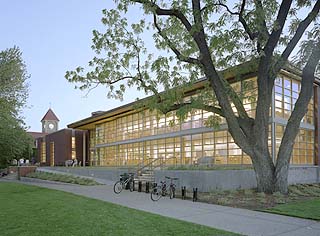
FYI - Special Collections @ Penrose Memorial Library


Collections

The Whitman College and Northwest Archives houses over 3500 linear feet of manuscript and archival material and about 10,000 rare books. Major collections include:

College Archives: Official and unofficial records, publications, select personal papers of faculty, staff, and alumni/ae, and other materials that document the history of Whitman College (chartered in 1883) and its predecessor, Whitman Seminary (chartered in 1859).

Northwest Manuscripts Collection: Manuscripts and records from individuals and organizations of significance to the history of the Walla Walla region. Materials in the collection range from the personal papers of some of the earliest missionaries in the region, including Marcus and Narcissa Whitman (1836), to records of contemporary local businesses and organizations, such as the Walla Walla Woman's Reading Club (1894-1995).

Myron Eells Library of Northwest History: Rare Pacific Northwest Americana and a growing, circulating collection of books and periodicals about the Northwest. Highlights include some of the first books printed in the Northwest at the Lapwai Mission Press (1839-45) and other early Northwest imprints.

Elbridge H. And Evelyn Clark Stuart Napoleon Collection: Books, furniture, and artifacts associated with Napoleon Bonaparte and the Napoleonic era. Highlights of the collection include a desk used by Napoleon’s surgeon on the island of St. Helena, William Mudford’s An Historical Account of the Battle of Waterloo (1816), and William Ireland’s Life of Napoleon (1822).

Vernon H. McFarlane Collection: About 130 illustrated books from the 15th to the 19th centuries. Highlights include a Nuremberg Chronicle (1493) and a number of rare atlases and Bibles.

Book Arts and Small Press Collection: Over 300 artists’ books and small press imprints, including works produced by the Dogwood Press and books created by college faculty, students, and the Whitman Book Arts program.

Collection Development Policy

The Whitman College and Northwest Archives is the institutional repository for Whitman College and functions as the final repository for the official records of the college, including college publications, institutional records, and other materials created by college employees in the course of performing their work. The archives also collects unofficial records of individuals and groups affiliated with the college, including records of student groups, personal papers and other materials created by faculty, staff, and alumni/ae, and Whitmaniana (artifacts bearing the emblem of the college).

The Whitman College and Northwest Archives collects materials documenting the history of Walla Walla region from the arrival of the first white settlers to the present. Local history records of interest include records of Walla Walla organizations, businesses, and educational and cultural institutions and personal papers and other materials that highlight important dimensions of Walla Walla history.

The Whitman College and Northwest Archives also maintains a rare book collection. Strengths of the collection include Pacific Northwest Americana, finely illustrated books from the 15th-19th centuries, and book arts. While the archives is particularly interested in strengthening these collections, all fine and rare editions will be considered for acquisition.